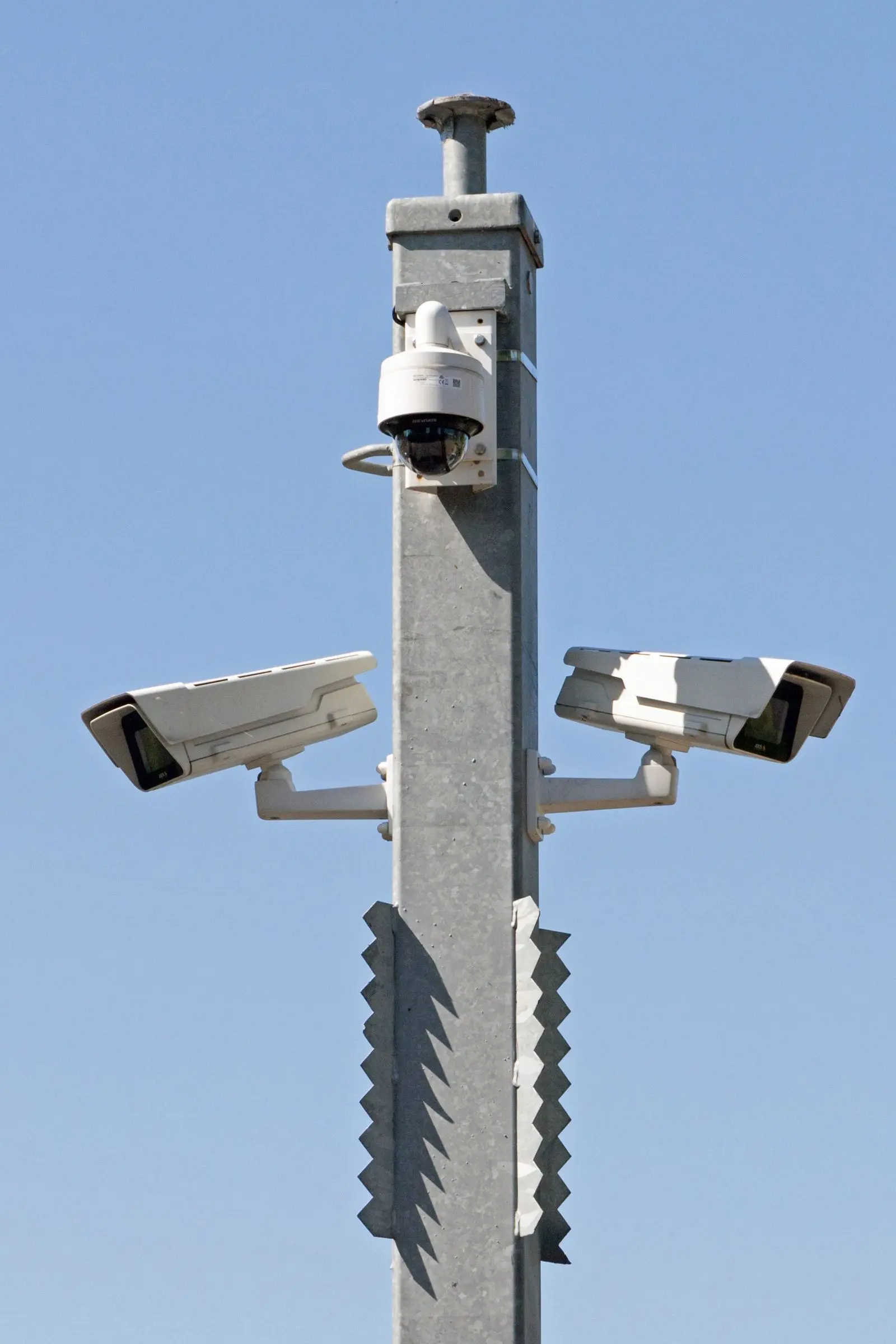
Flock Safety makes the license-plate cameras that now stand at intersections in 49 states, and this month the company is shrinking. Reuters reported on October 8 that Flock Safety plans to cut about 270 people, roughly 18 percent of its staff, after a voluntary buyout program. The company isn’t saying why. Reuters ties the move to growing opposition to the cameras from communities and lawmakers.
Here’s what’s known about the Flock Safety cuts, how big the pullback by cities looks to be, and what the fight over these cameras is really about.
What Flock Safety said about the cuts
The Reuters report, which ran in The Star, relies on people with direct knowledge of the plan who weren’t authorized to speak publicly. Flock declined to comment. Employees who accepted the buyout, according to the report, leave at the end of October. Wired had reported in September that the company, which has about 1,500 employees, opened a voluntary separation program.
Reuters lists the pressure Flock Safety is under. A Reuters/Ipsos poll found 38 percent of Americans support the cameras in their own community and 47 percent oppose them. In September, Florida banned automated license plate readers from state highways. Home Depot investors asked the retailer to review its ties to surveillance vendors after reports that Flock data had been used in immigration enforcement. A privacy lawsuit in Virginia argues that the widespread use of AI cameras amounts to warrantless surveillance. And the cameras have turned up in this year’s midterm campaigns, with candidates trying to tie opponents to them.
The company is hardly small or broke. Reuters says it runs about 120,000 cameras, serves more than 4,800 law enforcement agencies and nearly 1,000 businesses, and has raised over $950 million. A $275 million round in March, led by Andreessen Horowitz, valued it at $7.5 billion. The Atlanta-based company was founded in 2017. Flock hasn’t said what’s behind the cuts.
How many cities are leaving
For a rough count, there’s the anti-surveillance group Secure Justice, whose figures TechSpot reported at the end of August. By its tally, 214 cities and counties have dropped Flock since 2021, and 90 of them did it in August alone, about three a day. That’s four times the July number. Examples included Lansing, Michigan, and Pflugerville, Texas.

Flock Safety pushes back on that framing. A spokesperson told TechSpot that new city deals outnumbered nonrenewals by roughly 10 to 1 this year, and that more than 5,000 communities use its products. The company didn’t say how many customers it has signed. Both things can hold: a customer base can keep growing while a larger share of cities say no. Nobody has published numbers that would settle it.
Small towns show how it plays out. On WBUR’s On Point, one example was Bandera, Texas, a town of about 900 people, where the council approved a roughly $17,000, one-year contract in May 2025 and then voted 3-2 to cancel in May of this year. Tempe, Arizona, took down its 33 cameras. These are local decisions made one council vote at a time, which is partly why the total is so hard to track.
Why people object
Objections come in a few flavors. The first is process. Plenty of residents find out about the cameras after they’re up, since police can pay for them from discretionary funds, grants or pilots that never get a council vote.
Then there’s reach. Flock’s cameras are networked, which means an officer in one town can search plates across state lines. WBUR’s guests cited reporting that police in Tennessee, Texas and South Carolina ran searches for federal immigration agents, including in Illinois and California, where that’s restricted. Illinois bars using the system for immigration enforcement outright.
A third is error. In one Florida case discussed on the program, a free-form search for a black SUV after a hit-and-run led officers to the wrong vehicle, and a woman spent 13 days in prison. Critics also point to officers misusing the system. TechSpot notes that Florida’s governor criticized the technology after two Florida officers were arrested for allegedly misusing it, and that Senator Josh Hawley said he’s investigating how Flock collects, keeps and shares data.
What Flock Safety says in its defense
Flock’s argument is that the cameras solve crimes, and it has made a few concessions. CEO Garrett Langley has said the default data retention period will drop from 30 days to seven, and the company updated its terms to bar using its services to stalk or harass people. On WBUR, a supporter cited a University of South Carolina study of 216 jurisdictions that found an 11 percent drop in motor vehicle thefts. A critic on the same show said strong, independent evidence is thin and that Flock has funded some of the studies itself.
That’s the real gap. Supporters can point to anecdotes and a few studies, and opponents can point to misuse and the size of the network. A city council has to weigh them with very little independent data in front of it.
What to watch next
Three things are worth tracking. Does Flock say anything out loud about strategy once the buyout is done, including its push into drones? Do other states follow Florida’s highway ban? And how does the Virginia lawsuit end? A ruling on warrantless searches would matter far more than any single council vote. For a parallel case of local officials pressing an AI company in public, see our report on the New York City Council hearing about Grok.
Editor’s take
Read the Flock Safety job cuts as a sign that the argument has moved from the margins to the mainstream, not as proof the product is failing. The company still has large customers and a $7.5 billion valuation. But when Americans split 38 to 47 on whether they want the cameras nearby, every renewal turns into a public vote. To win those votes, Flock Safety will need to publish independent evidence and accept real audit rules. A seven-day retention promise won’t settle the warrant question.