
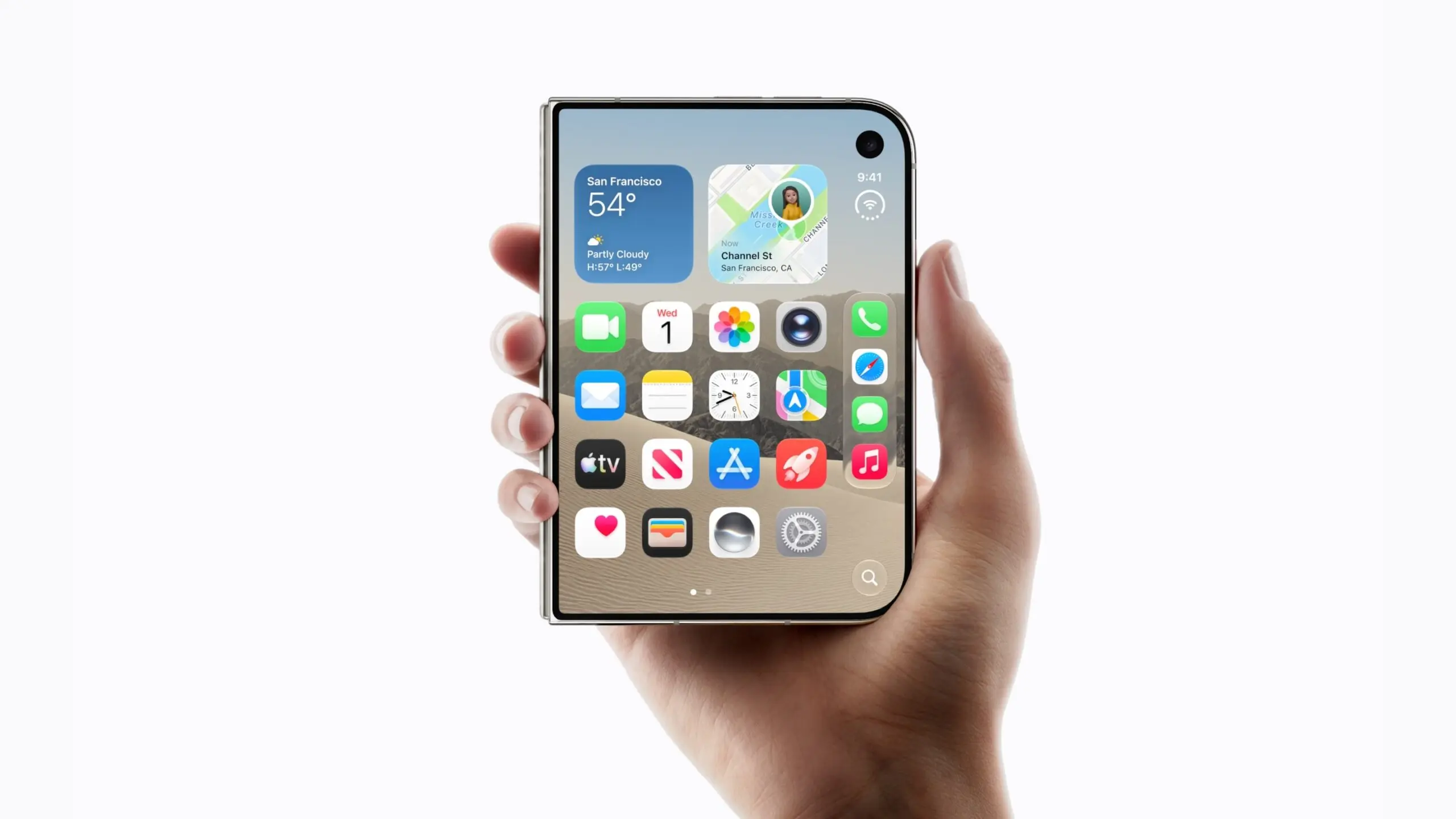
Apple’s first foldable iPhone went from “arrives next Friday” to “arrives after the holidays” in about half an hour. Pre-orders for the iPhone Duo opened at 8 a.m. Eastern on Friday, and by roughly 8:30 a.m. the Apple Store was quoting a January 25, 2027 delivery date for every model, color and storage size, according to Macworld’s live coverage.
The phone itself is still due in stores on October 23, one week from today. But anyone who orders online now should plan on a wait of more than three months.
What happened on Friday morning
The launch hit trouble before it even started. Apple’s online store went down shortly before 8 a.m., and when it returned, a new message asked shoppers to stay on the page until Apple could bring them in. The pre-order page opened a few minutes after eight, while the Apple Store app lagged behind it.
Delivery estimates then moved in steps. A handful of early orders, including one from a reader in Denmark, received October 23 dates. After that, unlocked models showed December 1 to 8, then December 8 to 15, and by 8:21 a.m. every configuration read December 15 to 22. Roughly 30 minutes after orders opened, every color, capacity and carrier flipped to January 25, 2027. Macworld called it the furthest slip it has seen on an iPhone pre-order.
The January date was not limited to one model. The Apple Post, citing MacRumors, reports that it covered both colors, Star White and Night Sky, and all four storage sizes from 256GB to 2TB. 9to5Mac’s pre-order post, published as the store opened, still told readers that first orders would arrive October 23. That was accurate for a few minutes, so check the date on the page you are actually looking at.
Where you may still find one sooner
The Apple Store is not the only route. At 8:50 a.m., Macworld found T-Mobile quoting late October and AT&T and Verizon quoting November, though carrier purchases generally require signing up for a line or a plan. Best Buy’s page still listed October 23, but only for shoppers adding or replacing a line on AT&T or Verizon, and the real date could be later.

In-store pickup is murkier. Apple’s own site told shoppers to check back on October 24 for retail availability, which suggests limited daily stock at the stores. The Next Web reports, citing Bloomberg, that Apple’s retail stores ran out of launch-day stock almost as soon as pre-orders began. The outlet notes that Apple usually keeps some phones back for walk-in shoppers on launch day, though the company has not said how many units it has.
Dates can also change. Apple adjusts inventory, processes cancellations and adds stock as it goes, so an estimate quoted this morning is a snapshot and not a promise.
Why supply is so tight
Apple has not explained the slip and has not said how many Duos it built. The company did warn that demand would be high, Macworld reports. Everything beyond that comes from reporting and analyst estimates, and it should be read with that in mind.
The Apple Post says Apple reportedly raised its iPhone Duo orders with suppliers by 30% in the days before pre-orders, though it also notes that more production does not mean more phones on day one. Counterpoint Research expects about six million Duos to sell this year, per The Next Web’s summary. A Yellow.com roundup adds that GF Securities analyst Jeff Pu trimmed his 2026 forecast from seven million to six million in September, blaming hinge constraints instead of weak demand. The same roundup passes along a caution from AppleInsider’s William Gallagher: a quick sell-out does not prove runaway demand if Apple built fewer phones than usual, and a brand-new design makes demand hard to forecast.
That caution matters. A sell-out in a market with limited supply says a lot about the shelf and not much about the customer. Plenty of products have sold out because there were never many to buy.
What the phone costs and why people are lining up
The iPhone Duo starts at $1,999 for 256GB and rises to $2,199 for 512GB, $2,599 for 1TB and $3,199 for 2TB. A separate 9to5Mac analysis describes the launch as a major marketing success, calls the backorder unprecedented, and argues that a fair target would be to match initial demand within four to six weeks. Those are the writer’s opinions, not Apple’s, and the piece offers no revenue figures to back the claim that Apple is losing sales.
What buyers get is a 5.4-inch outer display that opens into a 7.6-inch inner one, Apple’s A20 Pro chip, and a dual 48-megapixel rear camera, according to Tom’s Guide. Carriers are advertising plans from $55 a month, and trade-in offers of up to $1,200 off.
Scarcity is already feeding a resale market. Macworld reports that a 1TB Night Sky listing sold on eBay for $3,777.77, more than $1,000 above Apple’s price for the same model.
What buyers can do
If you already placed an order, the sensible move is to leave it alone. Canceling and reordering would likely put you at the back of the line, and Apple may shorten some dates as it adds stock. Macworld’s editor suggested the January estimate may be a three-month ceiling in the ordering system, and that phones could ship a week or two earlier. That is a guess, not a commitment, so plan for the date you see.
If you have not ordered, check carrier channels and the Apple Store app on October 24 for pickup availability, and consider whether a couple of months’ wait is worth it for a first-generation device. Resale prices far above the sticker price are the most expensive way to skip the line, and they carry their own risks, since you are buying from a stranger.
Watch the dates, too. If Apple’s estimate drops in the next few weeks, that is the clearest sign supply is catching up. If it stays put, expect the shortage to run well into the holidays.
Editor’s take
The January date tells us about supply, not about success. A sell-out and a backlog look the same from the outside whether Apple built three million phones or ten million, and the company has not said which. The number to watch is how quickly the delivery estimate shrinks over the next four to six weeks. If it falls fast, this was a launch with a thin first batch. If it barely moves, the Duo is a harder phone to build than Apple expected, and buyers waiting on a first foldable should plan for the long haul.




1 comment