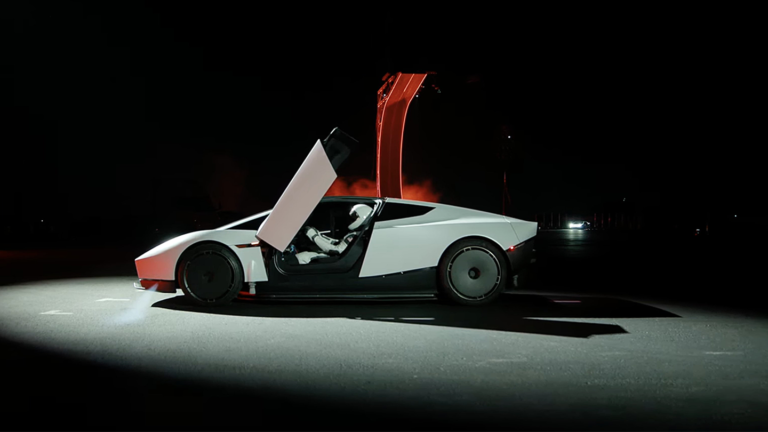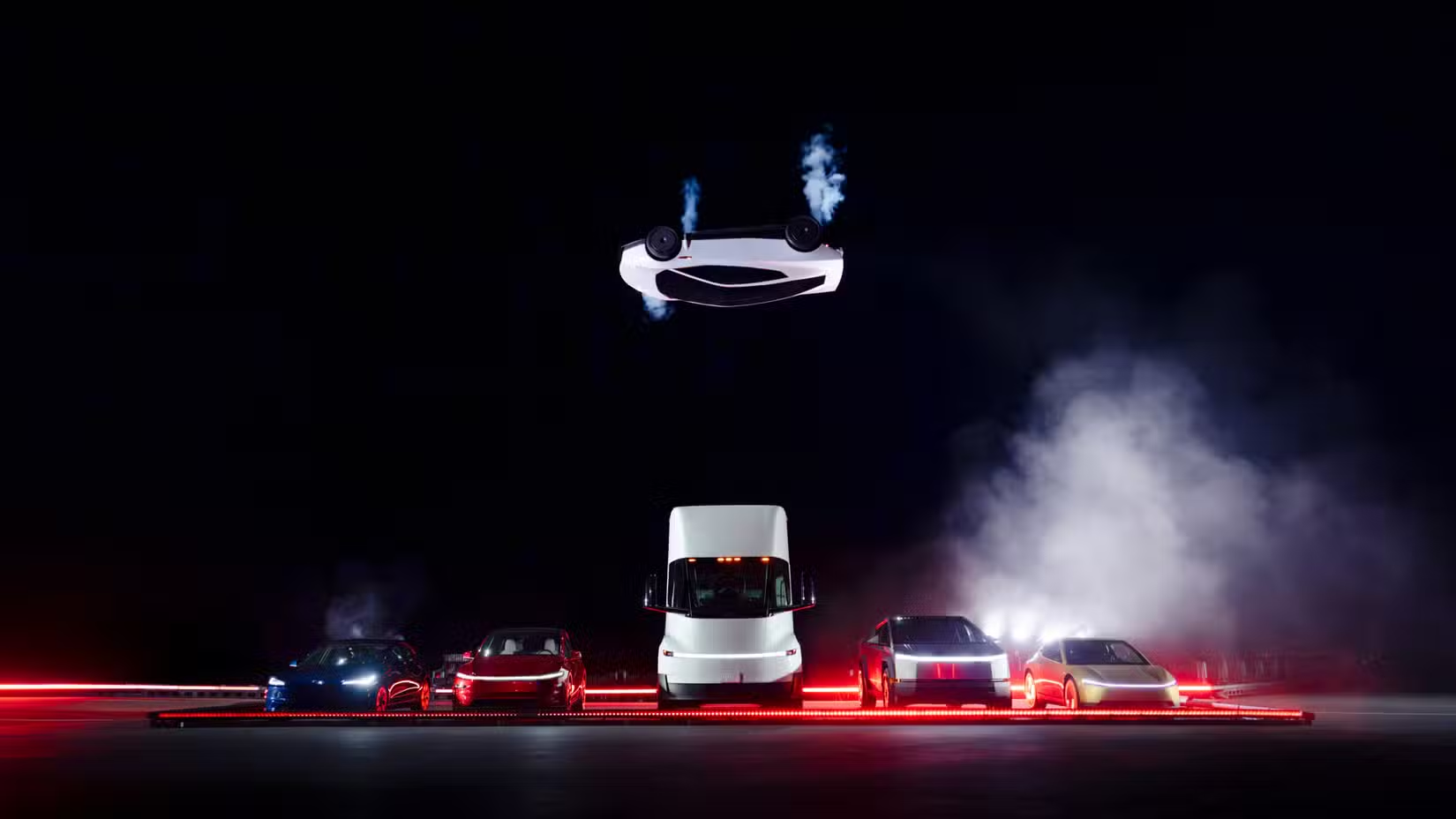
Tesla opened Roadster reservations within hours of its October 15 reveal, and the stunt footage took most of the attention. The Tesla Roadster fine print deserves more of it. Tesla’s reservation page and agreement say any price you see is only an estimate, delivery isn’t guaranteed, and the flying version isn’t approved for public roads.
Here are five catches in the Tesla Roadster fine print you should know before any money moves. Every figure below comes from the outlets linked in the text, and the performance numbers are Tesla’s own claims, not independent tests. This is general information, not financial advice.
What a Roadster reservation actually secures
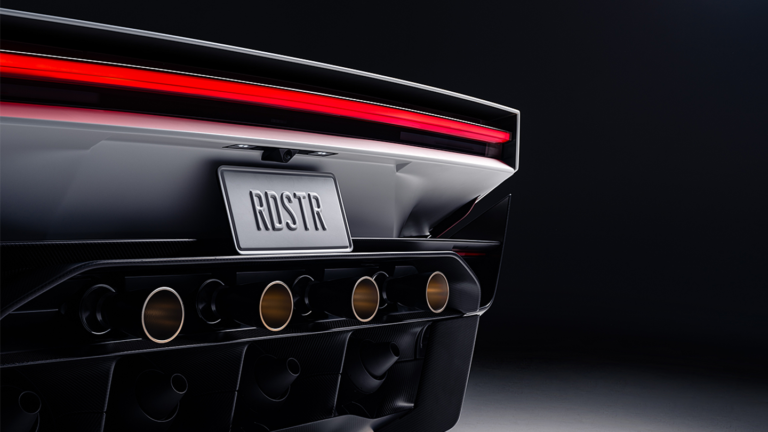
Tesla is taking reservations for three versions, according to TechCrunch. Performance is labeled road-ready, and its reservation is $50,000. Thrust is labeled race-ready, adds rear-mounted cold-gas thrusters, and costs $250,000. Rocket seats one, has ten thrusters, and is invite-only.
You pay in two steps. Tesla takes $5,000 the moment you click, then wants the other $45,000 inside ten days or the reservation is canceled, Electrek reports. Thrust depends on who you ask: Kelley Blue Book says $5,000 now and $245,000 within the same ten days, while other outlets simply list $250,000. Check the order page for the actual schedule before paying anything.
Electrek also reports that Tesla treats Thrust and Rocket as add-ons to the Performance car, not as separate models. Why Tesla builds the car at all is a separate question, which we cover in our look at the Roadster as a halo car, not a revenue plan.
A deposit buys a place in line. Trending Topics notes that a reservation is not a purchase agreement, and that no price has been set for any version. Our buyer’s guide to the Roadster reservation covers the money side in more depth.
Catch one: the price is only an estimate
The Tesla Roadster fine print doesn’t promise a number. According to Kelley Blue Book, the reservation agreement calls any estimated price just that, an estimate, and says options and hardware are still being finalized.
That matters because Tesla has not named a price for any version. Trending Topics points out that the 2017 base price was $200,000, and observers expect the final figure to be higher now. A buyer who reserves today is committing a large sum without knowing the balance due.
Catch two: delivery is a goal, not a promise
The same Kelley Blue Book report says the agreement states Tesla cannot guarantee when, or whether, it will deliver the car because the Roadster is still in development. Elon Musk has pointed to 2028 for production, according to Electrek.
Tesla has missed dates before, and that history explains the caution. Tesla showed the second-generation Roadster in 2017 and promised deliveries for 2020. TechCrunch counts further delays announced in 2020, 2021, 2023 and 2024, and even this reveal slipped, first from late 2025 to April 1, then to an October 1 attempt that bad weather pushed back. Treat 2028 as a hope, not a date to plan around.
Catch three: the refund terms are narrower than they sound
Electrek reports that Tesla calls the first $5,000 fully refundable. The coverage does not clearly say how the second payment is treated if a buyer later cancels. Trending Topics adds that Tesla’s German page lists only the first 5,000 euros as fully refundable and says nothing about the rest, while Tesla’s US terms reportedly allow cancellation at any time before a purchase agreement is signed, with a full refund. Those two descriptions don’t match, so read the refund terms line by line for your own country.
Getting a refund can also be harder than pressing a button. Electrek reported in 2025 that longtime Roadster reservation holder Marques Brownlee found no cancel option on his reservation page and had to call or email, and that he reached only voicemail for days. He expected to get back $45,000 of his $50,000, and he later said Tesla also sent the remaining $5,000. That case involved the older 2017 reservation, not the new one, but it shows how the process worked in practice.
Catch four: the flying versions are not cleared for public roads
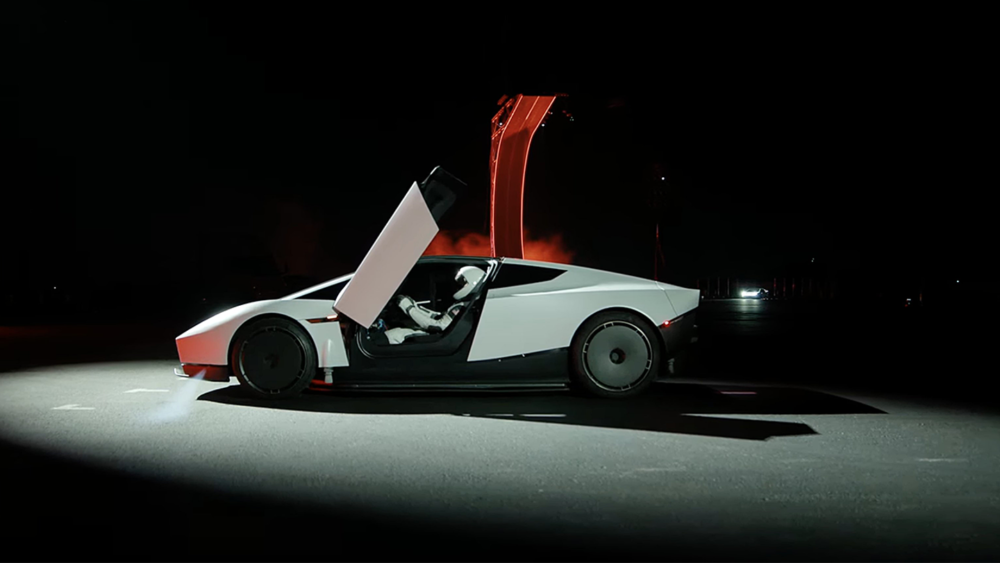
Tesla’s own Roadster page says the Rocket is not approved for public roads, according to Electrek. Kelley Blue Book goes further, reporting that Tesla acknowledges the Rocket is not road legal anywhere, and that it is unclear whether any state will allow the Thrust on public roads. Tesla describes only Performance as road-ready.
At the reveal, Musk said, per Torque News, “I’m not sure it’ll be legal in all jurisdictions.” Torque News’s author also lists regulatory questions he sees, including pressure-vessel certification, gas venting near pedestrians and debris thrown by the thrusters. Those points are his analysis, not statements from regulators or Tesla.
The Tesla Roadster fine print is only part of the picture. Safety is another. TechCrunch reports that Musk said safety is not the main goal for this car, and notes that the carbon-fiber pressure vessels used to store compressed air have been tied to SpaceX rocket explosions. Coverage mentions no regulator review of the car. Our look at what the flying demo actually proved goes through the difference between a closed-course stunt and a car you can register.
Electrek’s author adds that the stunts were done on limited, non-road-legal versions and may void the warranty. That is his view, so ask Tesla directly what the warranty covers on each trim.
Catch five: the specs are targets, and some shrank since 2017
Electrek lined up this year’s claims against the 2017 promises, and the comparison is mixed. Range is now listed as more than 300 miles, where 2017 promised about 620. The car seats two, where the 2017 pitch was a four-seat 2+2. The Rocket tops out above 230 mph, where 2017 promised more than 250. Acceleration goes the other way: Performance targets 0-60 mph in under 1.6 seconds, ahead of the 1.9 promised in 2017.
Tesla claims a 0.81-second run from 0 to 60 mph in testing, according to Kelley Blue Book and Torque News, and Musk said the company expects to do better. Those headline figures come from the thruster-equipped versions, not the road-ready one. For the version most buyers could actually reserve, the numbers are still targets.
How to read the Tesla Roadster fine print before you pay
Reading the Tesla Roadster fine print starts with the agreement itself, not coverage of it. Read the reservation terms for your country, since the US and German pages appear to differ. Save a dated copy of the page and terms the day you pay, because pages can change after money has moved.
Then ask Tesla for answers in writing. Is the full amount, including the second payment, refundable until you sign a purchase agreement? How long does a refund take, and how do you request one? What happens to your place in line if the specs change? If an answer is not in writing, assume there is not one.
Opportunity cost is the other number to weigh. A $50,000 deposit that sits with Tesla for two years or more is money you cannot spend or invest, and at $250,000 the tie-up is five times larger. A call to your insurer and your state motor vehicle agency can tell you what a road-going Roadster would need, well before delivery.
Editor’s take
The stunt is impressive engineering. But the car most people can actually reserve is the road-ready Performance, and that’s the version Tesla has said the least about. Putting money down only makes sense if you’re comfortable with the refund terms, and right now nobody can say for sure how the second $45,000 is treated. Read the Tesla Roadster fine print, wait for the configurator price, and don’t let the video make the decision for you. The real test comes when Tesla shows a purchase agreement, because that’s when the fine print has to get specific.