Last checked . Picks are based on the prices, rates, fees and terms each provider publishes, checked at the source. We never rank products by commission. See how we’re funded.
An emergency fund is money you leave alone until something goes wrong: a car repair, a medical bill, a gap between jobs. Without one, those surprises tend to land on a credit card. Most people know they should have a cushion. Fewer know how big it should be, where to keep it, or how to start when nothing is left at the end of the month. This guide covers how to build an emergency fund in small steps, using federal agency guidance and the Federal Reserve’s latest household survey.
Why an emergency fund matters
Start with the Federal Reserve’s latest Survey of Household Economics and Decisionmaking, released May 13, 2026. It asked nearly 13,000 adults how they’d handle a $400 emergency. About 63% said they could cover it in full with cash or its equivalent, such as savings or a credit card they’d pay off at the next statement. That share hasn’t moved since 2022, and it was 68% in 2021. The other 37% would need another route, and 12% said they couldn’t pay it by any means.
Surprises aren’t rare. The same report found 59% of adults had at least one major unexpected expense in the previous 12 months. A major car repair or replacement hit 30%, a major home or appliance repair hit 22% and an unexpected medical bill hit 21%.
Savings also seem to protect against bigger money trouble. A Consumer Financial Protection Bureau (CFPB) study from 2022, built on a 2021 survey, compared people with at least one month of income saved to people with none. Only 5% of the first group had a debt 60 or more days past due, against 40% of the second. It’s a small sample and a snapshot, so it doesn’t prove savings caused the gap. Still, the pattern is hard to ignore.
Step 1: Pick a starter goal for your emergency fund
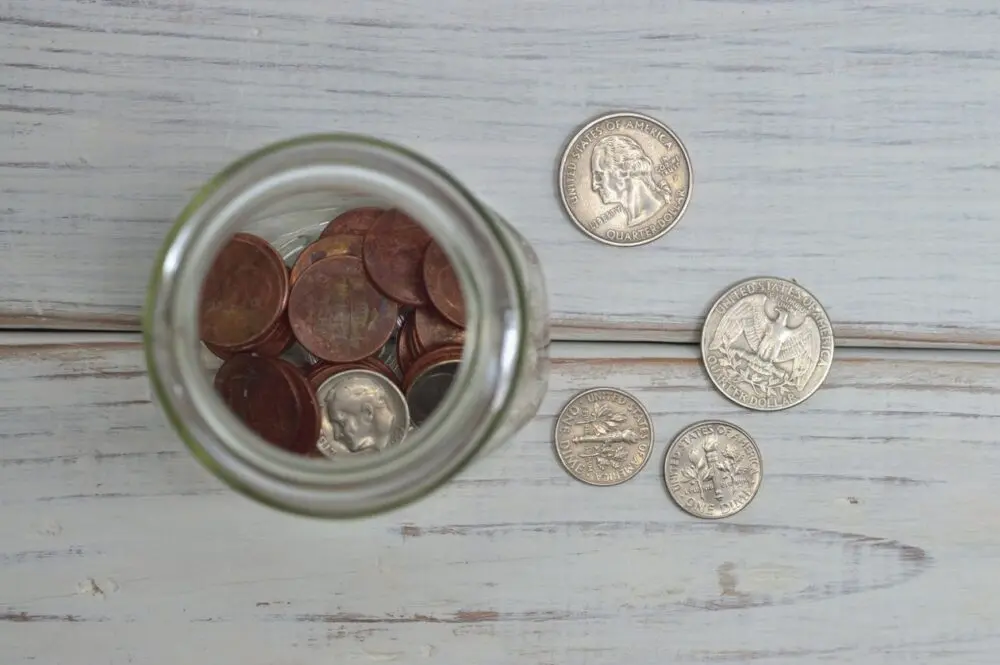
Three to six months of expenses can feel impossible when you’re starting from zero. So the CFPB suggests a smaller first goal of $500, though the right amount depends on your needs. Its savings booklet works through an example of $400 over 20 weeks, which is $20 a week. Another CFPB piece notes that setting aside 75 cents a day gets you to $100 in under six months.

Small and often works best. In CFPB research on savings nudges, people were more likely to sign up for recurring deposits when the goal was framed as $5 a day instead of $150 a month.
Step 2: Know your number for a full emergency fund
Nobody official agrees on one figure, so here’s what each source says. The CFPB’s home-buying guidance mentions a three to six month cushion. MyMoney.gov, the federal financial literacy site, says to have at least three months of needs before you start investing. The FDIC says experts generally suggest about six months of living expenses. FINRA, the securities industry’s nonprofit regulator, says roughly three to six months, and more if your income varies or you work in a specialized field.
A practical reading: three months of essential expenses is a solid first target, and six months is a better one if you’re self-employed, have a single income in the household or work in an unstable industry. Essential expenses means what you must pay: housing, utilities, food, insurance, transportation, minimum debt payments. If you haven’t tallied those yet, our guide on how to make a budget walks through it.
Here’s the math. If essentials run $3,200 a month, three months is $9,600 and six months is $19,200. That’s our illustration, not a recommendation for your situation.
Step 3: Automate your emergency fund
The CFPB’s advice is simple. Put a fixed amount aside every pay period before you pay other bills. You can split a paycheck by direct deposit into savings, or schedule regular transfers from checking. The FDIC gives an example: $20 every two weeks adds up to $520 a year before interest. Both agencies suggest sending windfalls such as tax refunds and work bonuses to the fund, ideally by direct deposit.
Automation works because it removes the decision. You can’t spend what you never saw.
Step 4: Keep it somewhere safe and reachable
An emergency fund should be easy to reach and hard to lose. The FDIC recommends a federally insured savings account or certificate of deposit, and notes that stocks, bonds and mutual funds aren’t FDIC-insured and can lose value. The CFPB says bank accounts are federally insured and easy to access, credit union accounts are generally lower-fee and federally insured, and cash at home isn’t protected from loss, fire or theft.
Check how deposit insurance applies. The FDIC says coverage is at least $250,000 per depositor, per insured bank, per ownership category, and balances in the same category at the same bank are combined. Checking, savings, money market deposit accounts and CDs are covered. You can verify that a bank is insured with the FDIC’s BankFind tool or by calling 1-877-ASK-FDIC.

For where to find a good rate, see our comparison of the best online banks and our explainer on money market accounts versus savings accounts. Rates change often, so compare current offers before you move money.
One caution from Investor.gov, the SEC’s investor education site: the trade-off for safe, accessible money is low interest, and inflation can erode purchasing power over time. That’s the price of having cash ready.
Step 5: Decide when to use your emergency fund
FINRA says to use the fund for unexpected expenses, sudden large bills or a temporary loss of income, so you avoid going into debt or selling investments at a loss. The FDIC’s examples include job loss, a drop in income and a major home or car repair. Holiday shopping and luxury purchases aren’t emergencies.
Write the rules down before you need them. A good test is three questions: is it unexpected, is it necessary and is it urgent? If any answer is no, it probably isn’t an emergency.
Step 6: Rebuild your emergency fund after you use it

Using your emergency fund isn’t failure. It’s the point. The CFPB’s savings booklet counts using the fund as a success and advises making a plan to replenish it. FINRA says to replenish it as soon as you can. Restart the automatic transfer, even at a smaller amount, and build back up.
What if you also have high-interest debt?
FINRA says that if you carry high-interest debt, you can split money between paying it down and building an emergency fund. Saving something regularly still matters even if you can’t hit the target yet. A small cushion keeps one repair from becoming a new balance on a card charging double-digit interest.
Common mistakes
Waiting until you can save a large amount, rather than starting with $20, is the most common. Keeping the fund in the same account as everyday spending makes it too easy to dip into. Investing the money in the stock market exposes it to losses at the worst time. And forgetting to restart contributions after a withdrawal leaves the fund permanently low.
This is general information, not financial advice.
Editor’s take
Treat your first $500 as a different kind of goal than your first $10,000. The small one changes how a flat tire feels. Set up the automatic transfer this week, pick a bank account that’s FDIC-insured, and don’t make the number perfect before you start. The fund you actually have beats the one you plan to build someday.