Short answer: Amazon’s Echo Time is a $199.99 Alexa alarm clock. Amazon says it uses ultrasound to detect your breathing while you sleep. The company has not said where that sleep data goes, how long it keeps it, or whether it shares it. Ask those questions before you put an Echo Time on your nightstand.
The facts below come from Amazon’s Echo Time announcement, plus coverage from Digital Trends and Tom’s Guide.
| Item | Detail |
|---|---|
| Price | $199.99, plus $39.99 for the optional stand |
| Kids version | Starts at $209.99 with a one-year Kids+ plan |
| Screen | 3.2-inch round touchscreen with no camera |
| Sleep sensing | Opt-in, using temperature, presence, and ultrasound |
| Smart alarm | Rings 10 to 60 minutes before your set time |
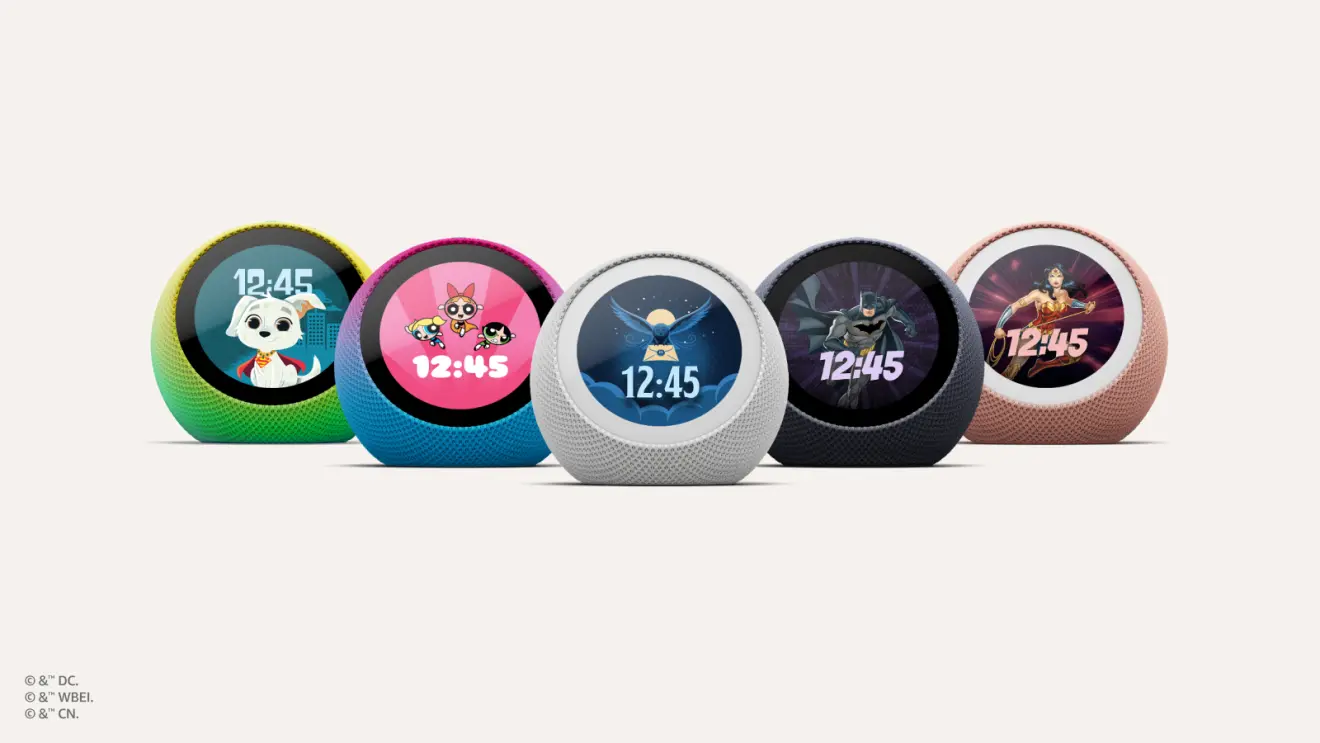
| Colors | Graphite, Glacier White, and Coral Pink |
What the Echo Time does
Amazon describes a round, ball-shaped clock with hundreds of clock faces. The screen glows like a sunrise before your alarm and dims at night to cut blue light.
The smart alarm is optional. Amazon says it rings during lighter sleep, somewhere in the 10 to 60 minutes before your set time. Each snooze builds the tone, up to four times.
Digital Trends says you can tell Alexa+ your schedule in plain language, and it sets the alarm and reminders. At night, it can play calming music or adjust the room temperature.

The Amazon Kids version adds wind-down content. Parents set schedules in the Amazon Parent Dashboard.
Amazon calls the sensor array Omnisense. It reads room temperature, checks whether someone is in the room, and uses ultrasound to pick up breathing. You do not need a wearable. Amazon also says the clock earned the National Sleep Foundation’s SleepMark designation.
What Amazon says about privacy on the Echo Time
Amazon lists a few controls. There is no camera. Lights show when Alexa is listening, and a privacy button turns the microphones off. Sleep sensing is opt-in, and you can switch it off in the Alexa app.
Those are real controls, but they do not answer the data question. Amazon’s announcement does not say whether it processes breathing and sleep data on the device or in the cloud. It does not say how long Amazon keeps the data or whether it shares it. The page links only to Amazon’s general privacy policy, not one written for sleep sensing. In 2023, Amazon agreed to pay $25 million to settle FTC claims over Alexa children’s privacy, as we reported. The question is fair.
What the Echo Time costs, and what is unclear
At $199.99, the Echo Time costs about twice as much as the current Echo Spot, Tom’s Guide says. The Spot launched in 2024 at $79.99 and offers Alexa+ too. Amazon says certain Echo Time features need Alexa+, which it says is included with Prime. It does not say which features, or what Alexa+ costs without Prime.
No independent testing has been published yet. Digital Trends and Tom’s Guide both wrote from the announcement, so the claims about smart-alarm timing and breathing detection are Amazon’s, not verified results.
Questions to ask before you buy
Does the smart alarm still work if sleep sensing is off? Do you need Prime to use it? Can you delete sleep data, and does Amazon use it to train Alexa? Our guide to turning off smart TV tracking shows how hidden many data settings are on devices already in homes.
Editor’s take
The Echo Time is a clock that asks to listen to you sleep, at roughly twice the price of Amazon’s own Spot. In its announcement, Amazon told buyers what the Echo Time senses. It did not tell them what happens to the data. Until it does, the cheaper Spot, or an ordinary alarm clock, is the better bet.