Last checked . Picks are based on the prices, rates, fees and terms each provider publishes, checked at the source. We never rank products by commission. See how we’re funded.
Short answer: anyone who demands payment by gift card is a scammer. Legitimate businesses and government agencies do not ask for gift cards. If you already read the numbers to someone, call the gift card company right away. Ask for your money back, and report the scam to the FTC. This guide covers how gift card scams work and what to do, based on the Federal Trade Commission’s advice.
Key facts about gift card scams
Where to report and who to call, from the FTC’s consumer guidance:
| Step | What to do | Where |
|---|---|---|
| 1 | Tell the gift card company, even if it was a while ago | The number on the card or the company’s fraud page |
| 2 | Ask for a refund. Some companies can freeze funds left on the card | The FTC names Apple and Google Play |
| 3 | Report the scam | ReportFraud.ftc.gov |
How gift card scams work
The FTC says gift card scams start with a call, text, email, or social media message. The scammer pushes you to buy gift cards. Then they ask for the card numbers and PINs. That lets them drain the value in minutes. The money is hard to trace and almost impossible to pull back once it is spent.
The FTC’s red flags are consistent. One is urgency. The scammer wants you to pay right now, so you can’t think or talk to someone you trust. Another is a set of instructions on which card to buy and where. Sometimes the scammer names several stores so cashiers don’t get suspicious, and may stay on the phone while you load money onto the card. The last is a request for the numbers or a photo of the card.
The stories scammers tell
The FTC describes several common versions. Some scammers pose as government agencies, such as the IRS, the Social Security Administration, or the FTC itself. Others pose as tech support from Microsoft or Apple and often ask for remote access to your computer. Some invent a family or friend emergency, sometimes using voice cloning. Some announce a prize that requires a fee. Others pretend to be a utility threatening to cut off service, run romance scams on dating sites, or send a fake check for too much money and ask you to send the difference on a gift card.
For more on impersonators, see our guide to government impersonation scams.
If you already gave someone the numbers
Act in this order. First, report it to the gift card company right away, no matter how long ago it happened. Keep the card and the store receipt, because the company will ask for them. Second, ask for your money back. Some companies may refund you. If the funds are still on the card, some can freeze it. Third, report it to the FTC at ReportFraud.ftc.gov.

The FTC page lists phone numbers for many issuers. Amazon is (888) 280-4331. Apple is (800) 275-2273, and you should say “gift card” to reach a live representative. Target is (800) 544-2943 and Walmart is (888) 537-5503. If your card isn’t listed, look on the back of it for contact information. Our wider checklist, what to do if you were scammed, covers the other steps. Those include watching your bank accounts and changing passwords if you shared access.
How to buy gift cards safely
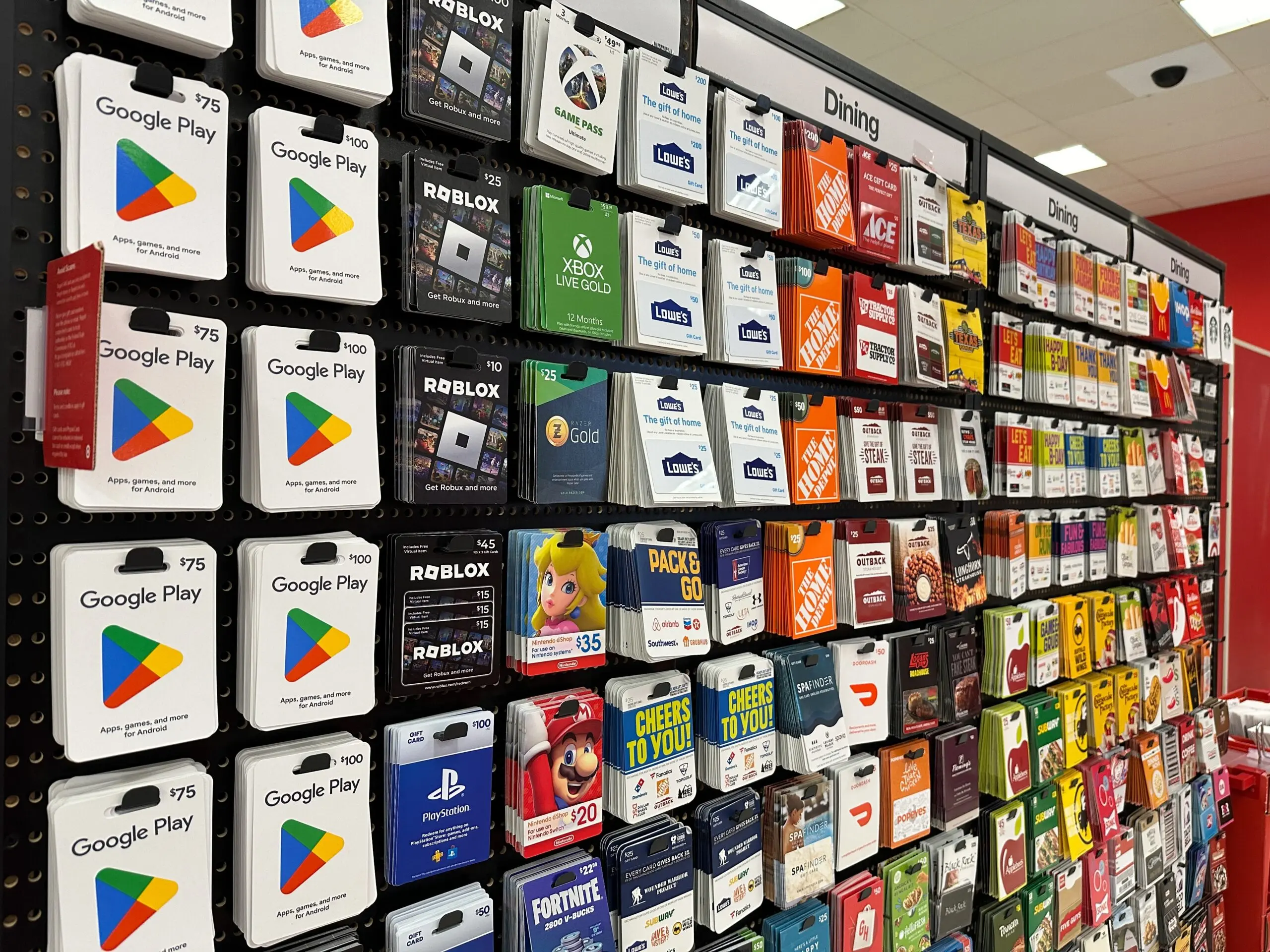
Buy only from stores you know and trust. Avoid online auction sites, where cards may be fake or stolen. Check that the protective stickers are intact and that the PIN is not exposed. Tell a cashier or manager if a card looks tampered with. Take a photo of the card and receipt, since the numbers help with reports and lost-card claims.
If a stranger, a caller or a message ever tells you to pay with gift cards, hang up or stop replying. A quick call to a relative or friend before you spend anything is the simplest protection there is. The scammer’s whole plan depends on you not stopping to ask.
Editor’s take
Treat any request for a gift card as the answer to the question “is this a scam?” Nothing legitimate needs one. The most useful habit is to slow the conversation down. End the call, find the real number for the company or agency yourself, and ask someone you trust before you buy anything.