AT&T beat Wall Street’s estimates on Wednesday, October 21, raised its 2026 profit outlook, and still watched its shares fall about 6%, the worst showing in the S&P 500 that session, according to Invezz. The AT&T stock drop had little to do with the quarter’s headline numbers. Investors were reacting to a slightly light count of new phone customers and to a rival that doesn’t yet sell them a phone plan: SpaceX’s Starlink Mobile.
What AT&T reported
According to AT&T’s earnings release filed with the SEC, revenue rose 5.3% to $32.3 billion. Adjusted earnings were 65 cents a share, up from 54 cents a year earlier, and Benzinga put the consensus near 60 cents. Free cash flow was $5.0 billion. AT&T also raised its 2026 adjusted earnings outlook to the “$2.40 range,” up from a range of $2.25 to $2.35 that Benzinga said the company had given before.
Reported earnings looked much weaker. Diluted earnings from continuing operations were 13 cents a share, down from $1.29 a year earlier. The release points to a $2.6 billion noncash impairment on AT&T’s Mexico wireless business, which the company is trying to sell. The charge adds 41 cents a share to the adjustments between the two measures. No cash left the building, but our reading is that AT&T now expects less for Mexico than it had carried on its books.
The number that spooked investors
Postpaid phone net additions, the customers who join monthly-bill plans minus those who leave, came in at 379,000. Benzinga said analysts expected 387,410, and the year-earlier figure was 405,000. The miss is about 8,000 customers, a rounding error for a company with tens of millions of subscribers. Wireless growth is what the stock is valued on, though, so small misses get attention. Benzinga, citing Bloomberg’s reporting, tied the softness partly to promotions and subsidies around the iPhone 18 Pro.
Spending is easing too. Capital investment was $5.6 billion in the quarter, including vendor financing payments, and AT&T guided to $23 billion to $24 billion for 2026 and lowered its 2027 and 2028 range to $22 billion to $23 billion a year. Lower spending leaves more cash for dividends and buybacks, which matters when the share price is under pressure.

The internet business looked better. AT&T added 442,000 fiber customers and 327,000 fixed wireless customers, for 769,000 in total, according to the release. Benzinga reported that about 42.8% of households using AT&T’s advanced home internet also buy its wireless service. That bundle is the heart of the company’s pitch, and it’s the part a satellite carrier would find hardest to copy.
Why Starlink Mobile hangs over the AT&T stock
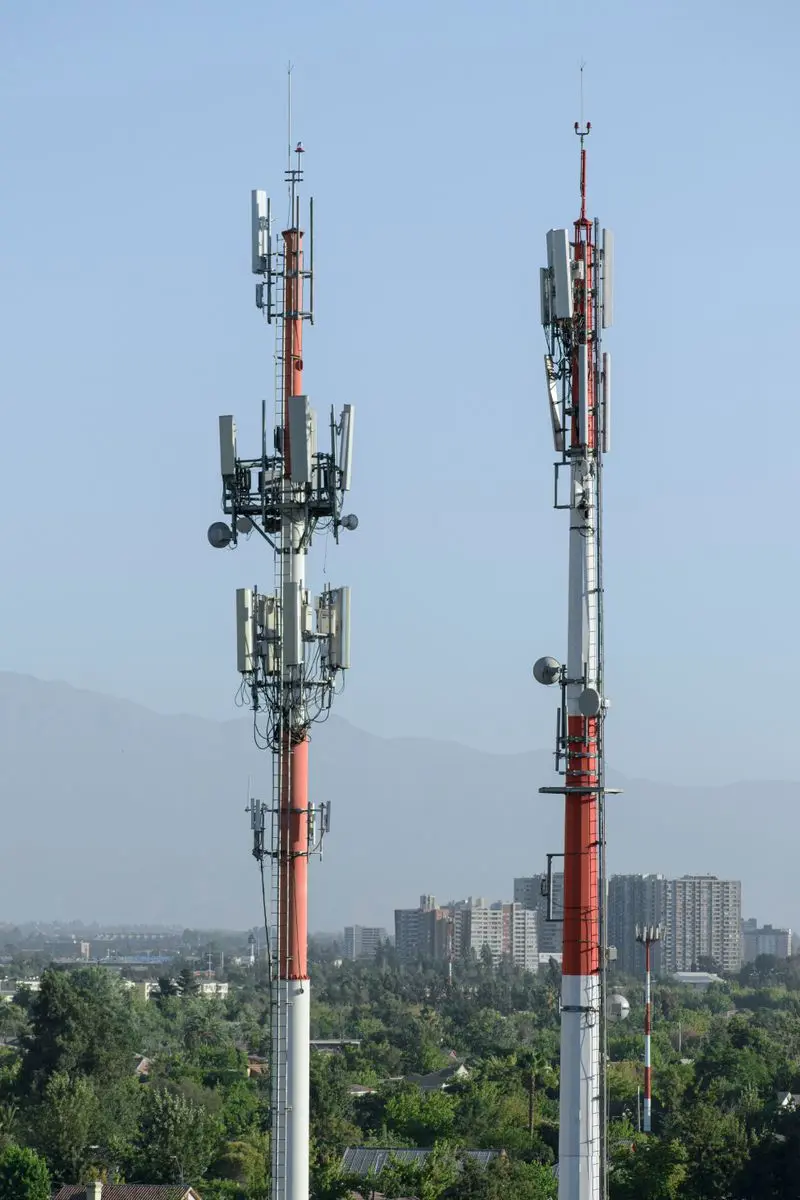
The worry began a few weeks ago. Broadband Breakfast reported on October 9 that SpaceX had agreed to buy Grain Management’s spectrum portfolio, about 800 MHz of airwaves that includes 14 MHz of paired nationwide low-band spectrum. The price was about $8 billion, according to The Wall Street Journal, which cited people familiar with the matter. SpaceX said the deal would pave the way for Starlink to become a major mobile carrier in the United States. Shares of AT&T, Verizon, and T-Mobile each fell about 6% in extended trading on the news, per the same report.
AT&T’s CEO, John Stankey, pushed back on the Starlink Mobile threat during the call. Invezz reported that he told analysts, “I wouldn’t over-rotate on what I would call one carrier of low-band spectrum.” He added that AT&T typically operates six to eight low-band carriers in a metro area, and that 40% to 45% of mobile traffic in Chicago starts indoors. The implication, our reading, is that satellite signals have a harder time reaching indoor users. Stankey also said low-Earth-orbit satellites could help carriers serve rural areas more cheaply.
Analysts weren’t unanimous. Benzinga paraphrased Bloomberg Intelligence’s John Butler as saying Starlink Mobile could squeeze AT&T’s margins by raising the cost of winning and keeping wireless customers. TD Cowen analysts, by contrast, said AT&T’s fiber-plus-wireless combination could give it an edge over emerging satellite services. Verizon fell about 2.5% and T-Mobile about 3% that day, per Invezz, so the whole group slid, though AT&T fell furthest.
What the drop means for shareholders
AT&T’s annual dividend is $1.11 a share. Invezz put the yield at 4.7% on Tuesday’s close. At Wednesday’s $21.96 close, our arithmetic puts it near 5.05%, which sits almost on top of the 10-year Treasury yield of 5.087% that we reported for October 16. When a stock yields about what a government bond does, income-minded investors have less reason to hold it for the payout alone. That’s a general observation, not a call on AT&T.
The company is also leaning on buybacks. The release says AT&T returned about $4.8 billion to shareholders in the quarter, including $2.8 billion of share repurchases, and plans $24 billion or more in repurchases, with about $10 billion of that in 2026. Smaller share counts help per-share earnings, but they don’t solve a competitive problem for the AT&T stock.
It’s the second time this month that a company beat estimates and saw its stock fall. Domino’s did the same last week, as we reported, when investors cared more about store growth than earnings per share. The pattern says that in this earnings season, the guidance and the growth story matter more than the beat. This is general information, not investment advice.
What to watch next
A few things should tell us whether Starlink Mobile is a real threat to the AT&T stock or just a headline. First, the timing of SpaceX’s spectrum purchase and any regulatory steps, which the reports we reviewed didn’t spell out. Second, AT&T’s holiday-quarter phone additions, when promotions are heaviest. Third, whether AT&T keeps its capital spending near the $23 billion to $24 billion it guided for 2026. And fourth, whether SpaceX names a launch date and price for a phone plan.
Editor’s take
The AT&T stock drop says more about the market’s mood than the quarter. AT&T beat, raised its outlook, and grew fiber and fixed wireless at a record clip. Investors sold anyway because the future of wireless suddenly looks less settled, and the AT&T stock took the hit. Starlink Mobile, a satellite carrier with new spectrum, is a real unknown, but it isn’t a customer loss yet. The number to watch is phone churn. If it stays near 0.92%, the threat is still a story. If it climbs, it’s a business problem.