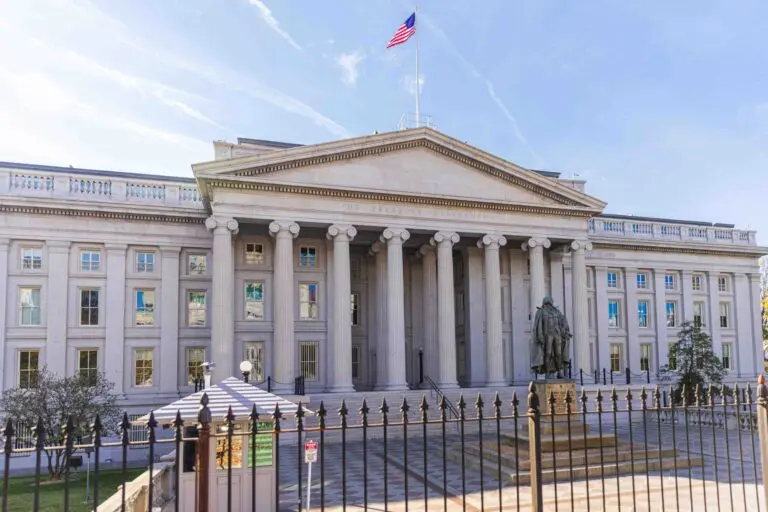
Foreign Treasury holdings remain enormous, but some of America’s closest allies are buying less, according to a Bloomberg analysis of Treasury data. That matters because foreign buyers help fund the federal deficit. Weaker demand can push borrowing costs up for everyone from the government to home buyers.
What the Treasury data show about foreign Treasury holdings
The U.S. Treasury’s table of major foreign holders shows that foreign Treasury holdings totaled $9,331.7 billion as of August 2026. Japan was the largest holder at $1,068.3 billion. The United Kingdom followed at $1,009.5 billion and mainland China at $590.7 billion. Together, those three account for roughly $2.67 trillion of the total.
These are holdings, not flows. A holder can keep a huge stockpile while buying very little new debt, and that is the distinction at the center of the Bloomberg report. The Treasury also cautions that its table may not show exactly who owns what, because securities held in overseas custody accounts may not be attributed to their actual owners.
What Bloomberg reports about buying
Bloomberg reported that the countries closest to the U.S. bought only $174 billion more in Treasuries than they sold in the first eight months of 2026. That is the lowest for the period since 2021 and down roughly 60% from last year. Japan, the largest foreign holder, was a net buyer of just $389 million, a drop of about 99%. South Korea sold a record $24 billion more than it bought. These figures come from Bloomberg’s analysis, not a Treasury release, and they combine government and private investors.
Bloomberg points to a few reasons. Higher U.S. yields make investments at home more attractive for Japanese and Korean investors. A weaker yen and won against the dollar make U.S. bonds more expensive to buy. Some investors are also choosing U.S. stocks over bonds. And U.S. debt recently hit a record $40 trillion, with the budget deficit still growing.
Why foreign Treasury holdings affect your rates
Treasury yields are the base for many consumer rates. When demand for new Treasuries weakens, the government has to offer higher yields to attract buyers, and mortgage and other loan rates tend to follow. Our reporting on the 10-year at 4.99% before the Fed meeting and our standing page on the 10-year Treasury yield show where borrowing costs stand now. Our mortgage rates page shows how they flow through to home loans.

Bloomberg flags a bigger risk. If Japanese investors began selling Treasuries outright instead of just buying fewer, the yen could strengthen sharply. That could unwind the so-called carry trade, where investors borrow cheaply in yen to buy higher-yielding assets, and trigger a broader market selloff. Nothing in the data shows that happening yet. Weak buying is not the same as selling, and the August level of foreign Treasury holdings remains close to record levels.
What to watch
The next monthly report from the Treasury will show whether foreign Treasury holdings kept rising in September. Watch Japan’s net position, and watch whether the pattern in South Korea repeats. Until then, treat the cooling as a trend to monitor, not a break in demand for U.S. debt. The government is still finding buyers. But with the 10-year note near 5%, it is paying more to do so.
It also helps to separate who holds the debt from who is adding to it. A country can top the holder list for years on past purchases. The signal to follow is the monthly change, because that is where a shift in appetite would show up first, well before any change in the size of the stockpile.
Editor’s take
Watch net buying, not total holdings. The big holdings numbers are reassuring and change slowly. The flow data are where a shift would show up first. A 60% drop in allied buying is worth tracking, but one cooling spell in eight months is not a crisis. The real test is whether yields have to climb to keep the auctions full, and whether foreign Treasury holdings keep growing at all.