GM did what Wall Street asked on Tuesday and got punished anyway. The automaker beat the profit forecast, then watched its shares drop roughly 4% to 5% in premarket trading. The GM Q3 results were strong: $50 billion in revenue, adjusted earnings of $3.70 a share, and a North American margin of 8.7%. What soured the mood was the outlook. GM narrowed its 2026 range instead of raising it, and finance chief Paul Jacobson put a $2 billion price tag on higher memory chip, steel, copper, and shipping costs. Investors heard that part louder.
What the GM Q3 results showed
According to GM’s 8-K filing, third-quarter revenue rose 2.9% to $50.015 billion. Net income attributable to stockholders was $3.335 billion, or $3.73 a share, up from $1.327 billion a year earlier. Adjusted EBIT, GM’s preferred profit measure, came in at $4.106 billion, up 21.6%, for a margin of 8.2%.
Hitting the number was not the issue. Adjusted earnings of $3.70 beat a consensus of $3.63 from LSEG, per Tradingpedia, though Investing.com’s write-up puts the bar at $3.69. Revenue cleared the Street’s $48.77 billion too.
North America did the heavy lifting
North America did the work in the GM Q3 results. It earned $3.592 billion before interest and taxes, up 43.4%, as margin climbed to 8.7% from 6.2%. Tradingpedia points to a richer mix of large pickups and fewer EVs, even with unit sales a touch lower.
The rest of the company was weaker. GM International earned just $28 million, down from $226 million. GM Financial’s adjusted pre-tax earnings slipped to $668 million from $804 million. And GM’s share of the US market fell to 16.1% from 16.8% a year ago, with 671,000 vehicles sold in an industry that moved 4.174 million.
Guidance: narrowed, with cash flow raised
This is where the GM Q3 results turned into a sell-off. GM narrowed its 2026 adjusted EBIT forecast to $14.5 billion to $15.5 billion, from $14 billion to $16 billion, which leaves the $15 billion midpoint where it was. It narrowed adjusted earnings per share to $12.75 to $13.75 from $12 to $14. The new midpoint is $13.25, which Tradingpedia notes is below the $13.41 analyst estimate it cites.

Not everything got narrower. Adjusted automotive free cash flow was raised to $11.5 billion to $12.5 billion from $9.5 billion to $11.5 billion, and capital spending is now expected in the lower half of the $10 billion to $12 billion range. According to the Yahoo Finance call summary, Jacobson also said GM has worked through much of the tariff pressure and that North America’s margin is back inside its 8% to 10% target.
The cost problem
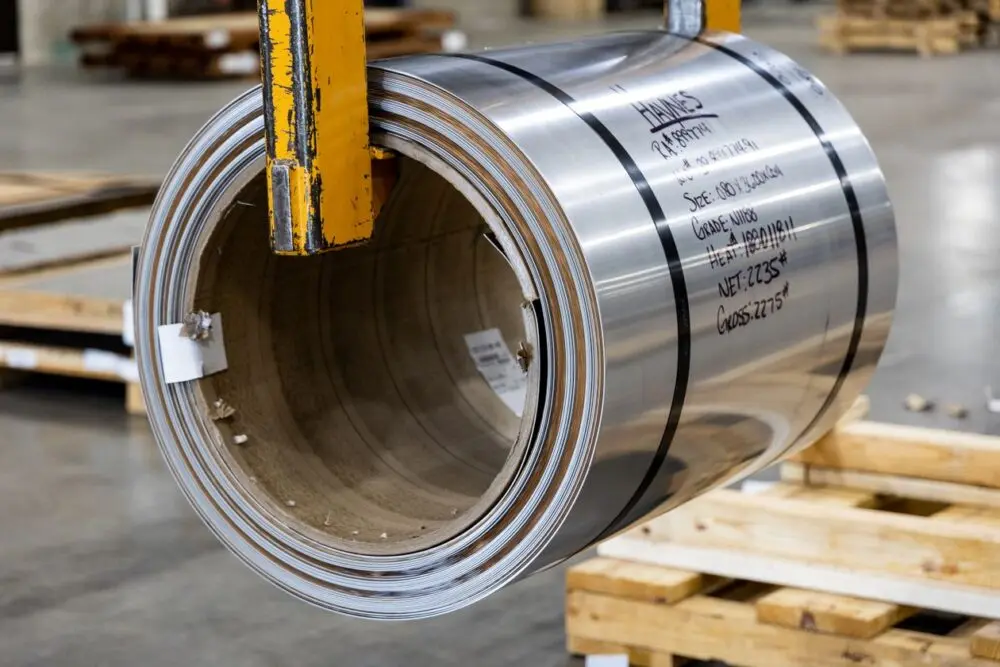
Here’s the number to remember: about $2 billion. That’s what Jacobson said higher DRAM, steel, copper, and logistics costs will add up to in 2026, and roughly $700 million of it already hit in the third quarter, per the Investing.com account. Copper and hot-rolled steel are up 10% to 15% since July. If that inflation holds, the Yahoo summary says it could cost $1 billion to $1.5 billion in 2027 EBIT.
Tariffs are the easier story. Net of IEEPA reversal benefits, GM has absorbed about $1.8 billion this year, and it now expects the full-year gross bill at the low end of its $2.5 billion to $3.5 billion range. Jacobson said about $500 million of IEEPA credits are booked, with roughly 60% received.
EVs and the buyback
GM expects to cut its EV losses by $1 billion to $1.5 billion this year. EV-related cash charges since the first half of 2025 total $7.4 billion, of which $4.6 billion has been paid, and Jacobson said about $1 billion more is coming in the fourth quarter. The 8-K shows the EV realignment adjustment was $238 million in the third quarter, versus $1.592 billion a year earlier.
Shareholders got a new promise too. GM finished its $6 billion buyback program and authorized a fresh $20 billion with no expiration date. Shares outstanding fell to 849 million from 904 million at the end of 2025, and the quarterly dividend is $0.18 a share. A buyback that size didn’t lift the stock, which suggests the market is looking at the 2027 cost outlook.
What it means for investors and car shoppers
This is general information, not investment advice. For investors, the GM Q3 results and the stock moved in opposite directions because the market is pricing 2027, not 2026. In our preview of the earnings report, we asked whether GM’s beat streak could survive falling US sales, and this quarter answers yes on profit and no on market share.
For car shoppers, GM said its North American pricing tailwind for the full year is about 0.5%. Jacobson cautioned against treating the 2018 and 2019 truck pricing boom as a model for the current cycle. If costs stay up, we think some of that eventually reaches sticker prices and fees, which is the same dynamic we covered in our look at the FTC’s car dealer fee order.
What management said on the call
The question-and-answer session put the GM Q3 results in context. Jacobson said the consumer has held up well despite weaker sentiment surveys, and CEO Mary Barra said GM is holding share in South America with Chinese-sourced products and that its China business is profitable. She also said 2027 truck volume should be roughly flat with 2026 because of a launch, with upside in 2028, and that savings from AI will be quantified when 2027 guidance arrives.

Asked about electric vehicle profitability, Jacobson said it’s too early to call a breakeven, with a step-function improvement expected in 2028 and 2029. Those answers came from the Investing.com write-up, which says it was produced with AI support and reviewed by an editor, so check the transcript before quoting them.
What to watch next
For anyone tracking the GM Q3 results, the next marker is that GM said budget approval comes in December and 2027 guidance in January. Jacobson told analysts that commodity prices would need to come down for him to be confident in earnings growth next year. Watch copper, steel, and DRAM prices, the fourth-quarter EV charge, and whether the market-share slide continues.
Editor’s take
The GM Q3 results show a company that is earning more in North America and still not winning over investors. The beat was real, but a narrowed outlook with an EPS midpoint below the Street’s estimate may have told shareholders there’s less room for upside than they hoped. Management said the path forward is more challenging, and a $2 billion cost headwind explains why. Until commodities ease, expect strong quarters and cautious stock reactions.