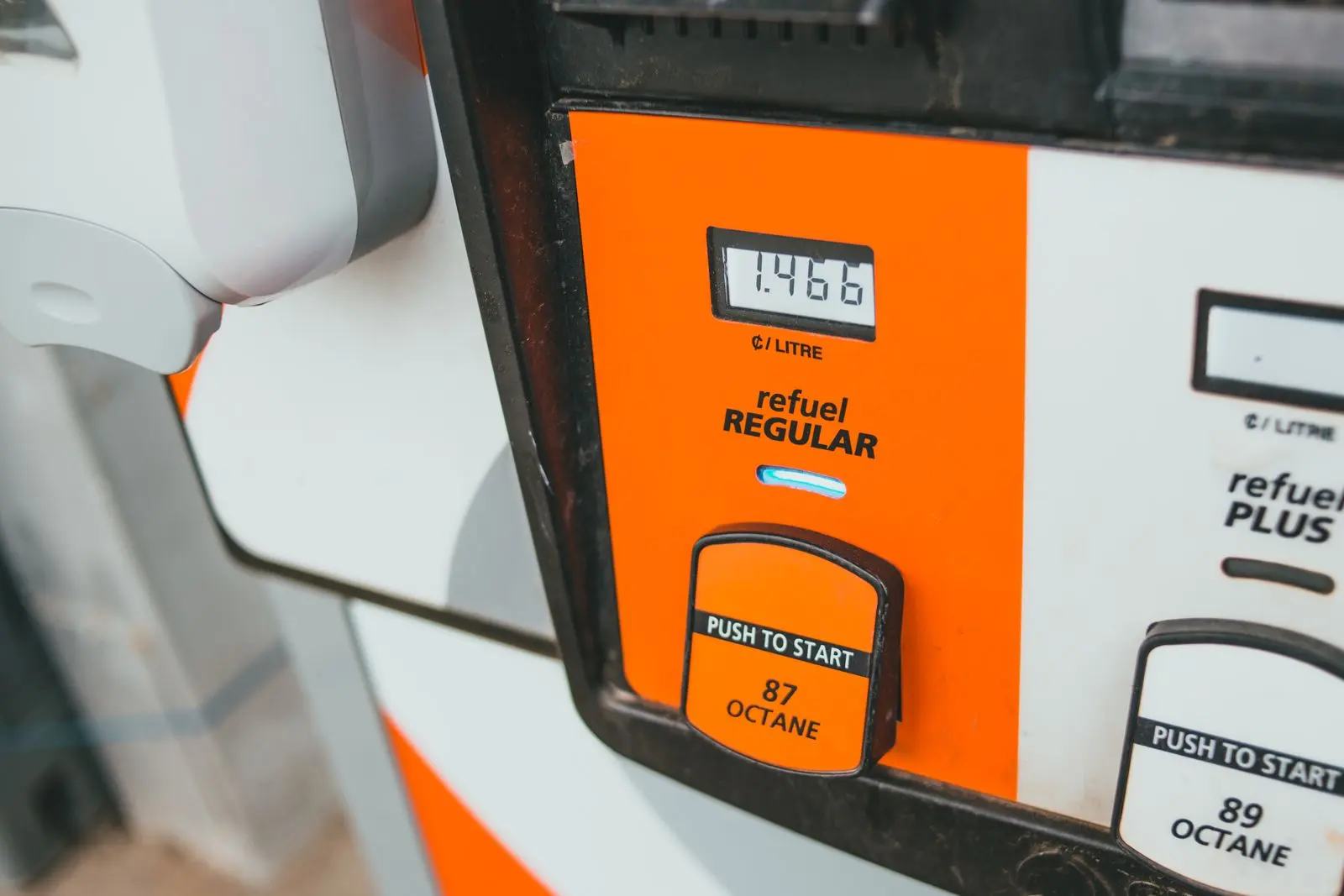
Gas prices are stuck near $4.33 a gallon, and crude oil just pushed higher again. AAA put the national average for regular at $4.33 in its October 15 update. Brent crude, the global benchmark, settled at $109.86 a barrel on Friday after touching $110 for the first time since May, according to a Bloomberg wire story carried by Rigzone. Here’s what that means at the pump, how far apart states are, and what the sources say about where gas prices could go next.
What gas prices look like right now
AAA’s exact figure on October 15 was $4.3344 a gallon. A week earlier it was $4.3612, so prices slipped about 2.7 cents over the week. A month earlier the average was $4.3289, which makes the month roughly flat. A year ago it was $3.0674. That puts the national average about $1.27 higher than last October, a rise of roughly 41% by our math.
AAA says gas has been above $4 nationally since late July. It also says this year’s swings in crude have led to seasonal record highs, and that autumn would normally bring lower prices. The group didn’t name an analyst or give a forecast, so treat that as AAA’s observation rather than a prediction.
A note on timing. AAA’s live page on Saturday, October 17, showed a lower number, $4.3085, versus $3.0511 a year earlier. The gap is about the same, around $1.26. We’re using the October 15 snapshot throughout so the comparisons line up.
What higher gas prices cost a household
Try a rough example. We’re assuming a 15-gallon fill-up, which is our own illustration, not a figure from AAA. At $4.3344 a gallon, that fill-up costs about $65.02. At last year’s $3.0674, the same tank cost about $46.01. The difference is about $19 every time you fill up.

If you buy 40 gallons a month, which is also our assumption, the extra works out to about $50.68 a month, or around $608 a year. Your own numbers will differ depending on your car, your commute and where you live.
Where gas prices differ most
Location matters more than most people expect. In AAA’s October 15 state data, California was the most expensive at $6.23 a gallon, followed by Hawaii at $5.63, then Washington and Nevada at $5.42 each. The cheapest was North Carolina at $3.70, then Georgia at $3.77 and Texas at $3.83. No state was below $3.70.
The spread between California and North Carolina is $2.53 a gallon. On our 15-gallon example, that’s about $93.45 for a fill-up in California against $55.50 in North Carolina, a difference of about $37.95.
Why crude is pushing gas prices up
The Bloomberg wire story ties Friday’s move to supply worries. It cites strikes on Saudi Arabia by Houthi rebels, attacks on energy infrastructure by both Russia and Ukraine, and a Russian diesel supply that’s largely shut out of global markets. These details come from a single wire story relaying other reports, so we’re treating them as context, not confirmed facts. Yahoo Finance separately describes Middle East risks as outweighing supply efforts, which fits the general picture.
The crude numbers also differ a little between sources. Rigzone has Brent settling at $109.86 and West Texas Intermediate at $101.41. Yahoo Finance shows slightly lower figures, probably from a different time of day. Either way, oil is roughly $100 or more for both benchmarks.
What AAA’s supply data shows
AAA’s weekly update, relaying government data, says U.S. gasoline demand fell from 8.76 million barrels a day to 8.40 million. Total gasoline stocks rose from 204.7 million barrels to 208.3 million, and refinery production slipped from 9.34 million to 9.23 million barrels a day. Crude inventories fell by 8.6 million barrels to 415.6 million, about 3% below the five-year average. In plain terms, people drove a bit less, gasoline supplies built a little, and crude stocks got tighter. That mix doesn’t by itself point to a shortage of gasoline. AAA doesn’t draw the link, but it may be one reason gas prices have held steady while crude moved.
The recent jump in crude is clear in AAA’s numbers too. West Texas Intermediate settled at $95.09 on Wednesday, October 14, per AAA, and $101.41 on Friday per Rigzone. By our arithmetic that’s about $6.32 in two sessions.
Diesel is the bigger squeeze
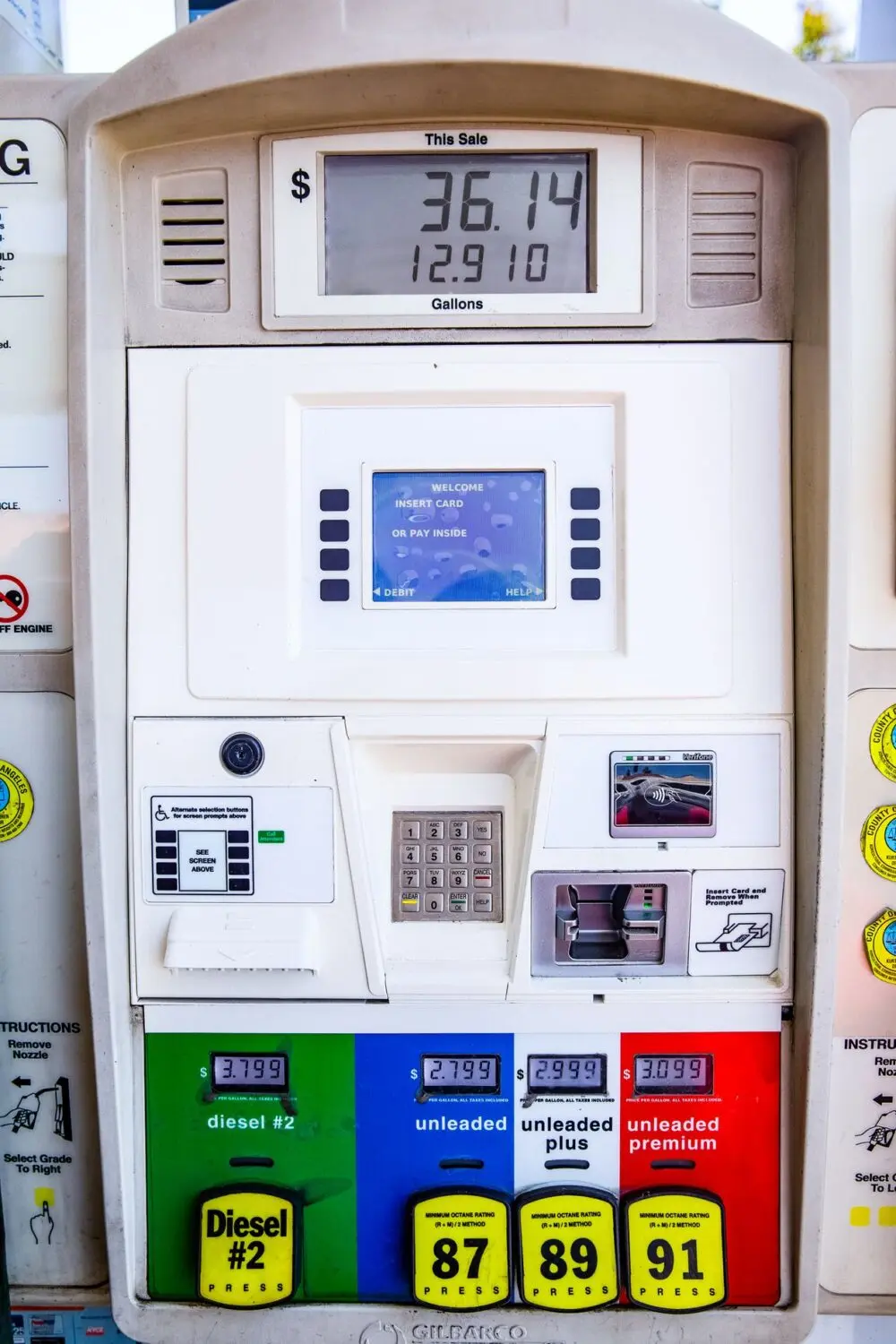
If you drive a gasoline car, diesel can feel like someone else’s problem. It isn’t, because trucks carry groceries, packages and building materials. AAA’s live page on October 17 listed the national average for diesel at $6.33 a gallon, up from $3.64 a year ago, about $2.69 or roughly 74% higher by our math. We can’t say how much of that reaches store shelves. The sources state only the pump numbers.

Don’t compare that $6.33 with the $4.90 New York futures price in the Bloomberg story. One is a pump price and the other is a wholesale price for future delivery.
What we don’t know about gas prices
AAA gave no specific forecast, and we didn’t find a GasBuddy or EIA outlook to add. Whether tensions escalate, whether supply from Russia changes, and what a government stockpile release would do are all open. The wire story says the U.S. offered up to 17 million barrels from the Strategic Petroleum Reserve, but that’s from one source and we don’t have the scale needed to say how much it matters. We also can’t tell you whether pump prices will track crude in the next two weeks. They usually lag, but that’s general market behavior, not something the sources state.
Inflation is part of the picture too, and it feeds back into gas prices. We covered how the September numbers moved Fed expectations in our piece on the September inflation report and Fed hike odds, and in our look at the producer price jump.
Editor’s take
Gas prices aren’t spiking, but they aren’t easing either, and that’s the story. They’re flat on the month and about 41% above last year, while crude moved up again on Friday. If you drive a lot, the practical move is dull: check your state’s average on AAA before long trips, fill up in cheaper areas when you can, and don’t count on a seasonal drop. Watch Brent. If it holds near $110, expect gas prices to stay up too.