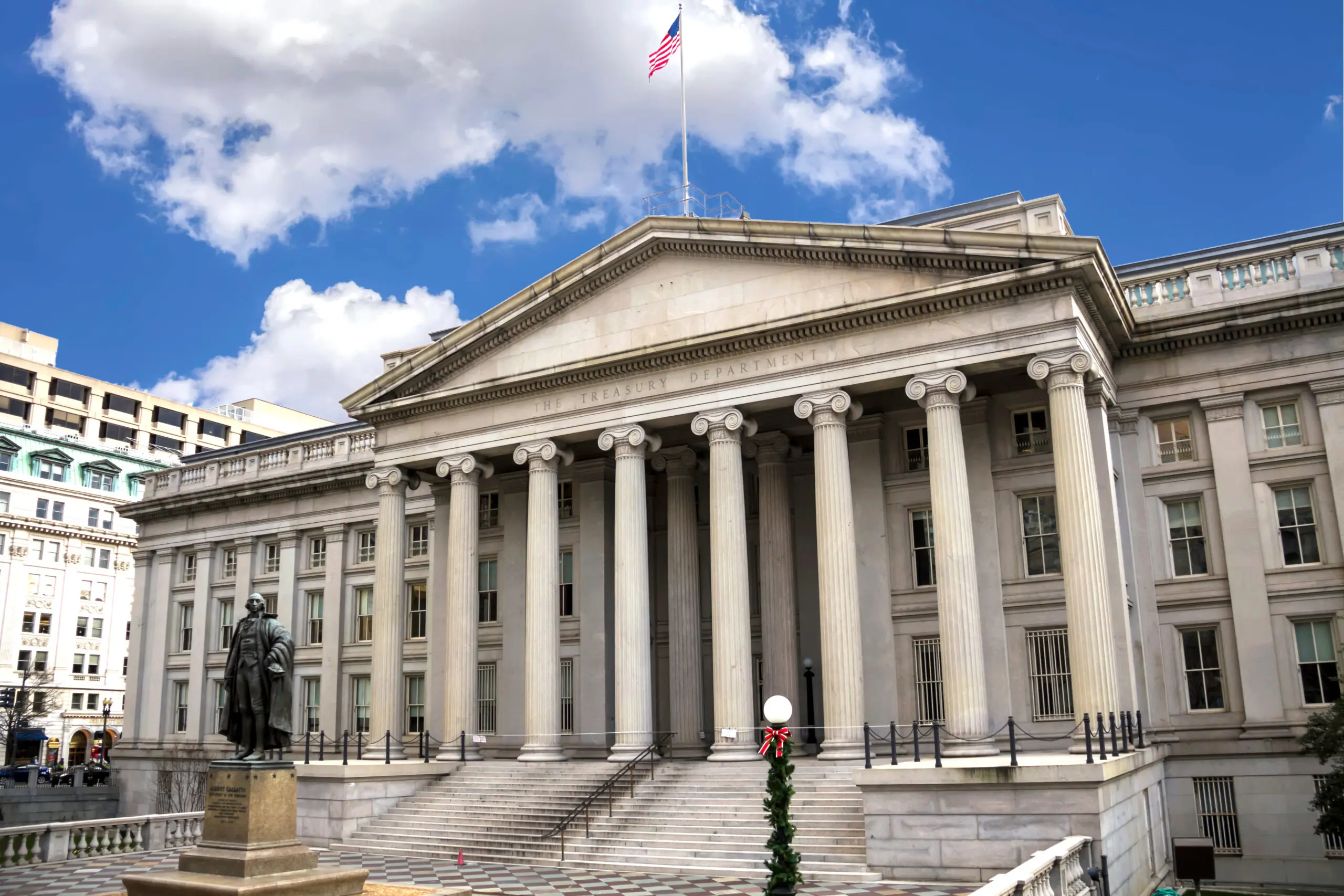
Starting January 7, 2027, a company that controls hundreds of single-family homes could be shut out of buying more of them. That is the core of the Treasury Department’s proposed institutional investor rule, released October 22. In the department’s words, “beginning on January 7, 2027, a large institutional investor generally may not purchase” a single-family home unless the deal fits an exception. It is a proposal, not a final rule, and comments are due “within 30 days after publication in the Federal Register,” according to Treasury’s press release.
Who the institutional investor rule covers
The proposed regulations implement Section 1001 of the 21st Century ROAD to Housing Act and codify key requirements of Executive Order 14376, titled “Stopping Wall Street from Competing with Main Street Homebuyers,” according to Treasury, which says the aim is “to make homeownership more affordable for hardworking Americans.” The line is a company that “has direct or indirect investment control over at least 350 such homes,” and Treasury says the Act’s definition adds other criteria, including being in the business of investing in, owning, renting, managing or holding single-family homes. Smaller landlords sit outside the line entirely, which is worth remembering before assuming this reaches every investor who buys a rental.
Where the exceptions in the institutional investor rule sit
The exceptions are where the rule will be won or lost. Treasury lists “several categories of excepted purchases, including purchases made pursuant to build-to-rent programs” and “renovate-to-rent programs that bring neglected homes back into the housing supply,” plus homeownership programs and programs that boost homeownership.
The proposal also leans on two definitions. An entity is “in the business of” owning or renting homes when it does so for income or financial gain rather than incidentally to another business. And an entity can be a passive investor in another entity that owns a home only if the two share no directors or officers and the investor has no property control right over the underlying homes. For funds and holding structures where ownership runs through several layers, those lines matter more than the 350 number.
Treasury also proposes “non-exclusive safe harbors for several statutory requirements.” The examples it gives include whether a home was substantially rehabilitated under a renovate-to-rent program, whether a renter received meaningful financial support toward buying a home under a homeownership program, and whether a renter received a right of first refusal and a 30-day first-look period. On penalties, the department says it would “clarify the calculation of the maximum civil penalty” when one prohibited purchase involves more than one large investor, without giving dollar amounts. The release is a summary. It does not reproduce the regulatory text or say what counts as “meaningful financial support,” so those answers sit in the proposed regulations it links.
What the institutional investor rule means for buyers
Treasury Secretary Scott Bessent said the administration “continues to restore the path to affordable homeownership.” Whether the rule changes anything for an ordinary buyer is a different question, and the release does not answer it. It gives no estimate of how many homes large investors buy now or how prices might respond.
In a market where sales are already thin, such as the one in our coverage of September’s record-low pending home sales reading, treat any price effect as an open question until there is data. The institutional investor rule is not in force, and it would not touch a purchase made before January 7, 2027, so a first-time buyer’s steps today are the same as last month’s. Our first-time home buyer guide covers them, and our look at the latest Case-Shiller report shows where prices stand.
Three things are worth tracking: the Federal Register date that starts the 30-day clock, how the final text defines meaningful financial support and the passive-investor test, and whether January 7, 2027 holds. This article is general information, not financial or legal advice.
Editor’s take
Watch the definitions, not the headline. A ban with four categories of exceptions gets decided by how those exceptions are written. Draw build-to-rent broadly and the institutional investor rule may change less than its title suggests; draw the safe harbors tightly and investors will have to restructure. Treasury’s summary leaves most of that unanswered, and the comment period is where it gets settled.