SpaceX reported third-quarter results after the bell on Tuesday, October 20, and the top line was hard to miss. Revenue hit $14.6 billion, up 161% from a year earlier, according to SpaceX’s earnings release. Net income came in at $4.4 billion, against a loss of $1.05 billion in the same quarter last year. The stock closed Wednesday at $159.31, up 7.8%. The SpaceX earnings carried a quieter story too: the AI business is now the biggest thing the company sells.
What the SpaceX earnings show
Wall Street had braced for weaker SpaceX earnings. LSEG estimates cited by BusinessDay put revenue near $12.7 billion and earnings at 14 cents a share. SpaceX reported diluted earnings of 35 cents. Adjusted EBITDA, the company’s own measure, was $8.8 billion. Income from operations was $2.8 billion, compared with a $273 million operating loss a year ago.
That’s a sharp turn. In August, SpaceX posted a loss in its first report as a public company. Before this week, the stock had been sitting at $146.03, above the $135 IPO price but well below its post-debut peak.
Net income of $4.4 billion is well above operating income of $2.8 billion. That gap means items below the operating line added to the total. The portion of the release we reviewed doesn’t break them out, so check the full filing before leaning on the headline profit figure. Interest on a roughly $90 billion cash pile is one plausible contributor, though that’s our guess and not something the release says.
Three businesses, one clear leader
SpaceX now reports three segments. Super Intelligence, the AI unit, brought in $7.56 billion. Connectivity, which is mostly Starlink, brought in $5.25 billion. Space, meaning launches and Starship, brought in $1.77 billion. AI alone outsold the other two combined, and Yahoo Finance noted it was about 15% of sales a year earlier.

Revenue and profit tell different stories, though. Connectivity earned $2.37 billion in operating income. Super Intelligence earned $431 million. Space lost $7 million. Add them up and you get the $2.8 billion total. The satellite business produced most of the profit, and AI produced most of the growth.
AI is also where the money goes. Capital spending was $19.6 billion in the quarter, and $16.4 billion of it went to the AI segment. Connectivity took $1.5 billion and Space took $1.6 billion. Nameplate compute, a measure of data-center capacity, reached 1.7 gigawatts. Meta is chasing a similar buildout, as our look at the Prometheus cluster in Ohio shows.
A cushion helps. SpaceX ended September with $51.3 billion in cash and another $38.6 billion in marketable securities, or about $90 billion in all. That pays for a lot of data centers, though not an unlimited number of them.
Starlink keeps adding customers
Starlink had 13.6 million consumer subscribers at the end of the quarter, up 1.6 million from June, and the average consumer paid $69 a month. By our arithmetic, that works out to roughly $2.8 billion a quarter from consumer plans. The rest of Connectivity comes from other customers. Teslarati noted Starlink is now installed on more than 3,800 aircraft.
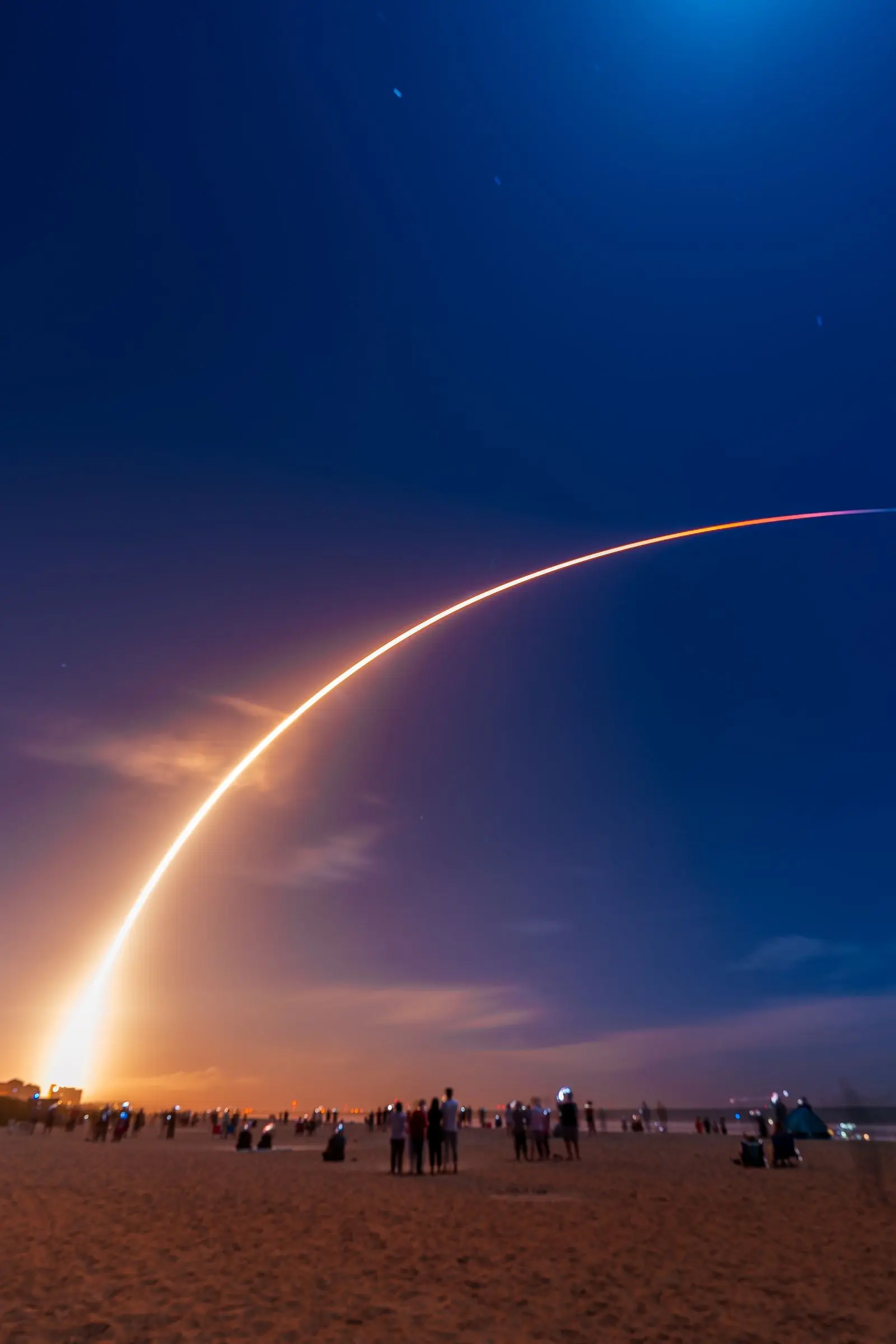
Space had a notable quarter even if it barely made money. Teslarati reported that Flight 14 was the first revenue-generating Starship mission, deploying 26 of the larger V3 Starlink satellites. SpaceX also completed 12 customer launches, including NASA’s Nancy Grace Roman Space Telescope.
The mobile push matters too. On October 8, SpaceX agreed to buy spectrum from Grain Management for about $8 billion, a deal that still needs FCC approval. On the call, the company’s chief operating officer said SpaceX plans to become a major mobile carrier in the U.S. Carriers noticed. AT&T shares fell 6% on Wednesday as investors weighed its quarterly results against the Starlink threat. For now, the point is that Connectivity isn’t standing still, even with AI getting the attention.
The Tesla question
The call that followed the SpaceX earnings release also produced news that has nothing to do with rockets. Elon Musk said merging SpaceX with Tesla would be a good idea, and both companies have formed special committees to study a possible deal, according to a Yahoo market wrap. He joked that he felt like he was “tap dancing through a minefield.”
No deal has been announced. The committees are a first step, not an agreement. Barclays has suggested a deal could come before Tesla’s December 3 annual meeting and estimated that in an all-stock deal Musk would hold about 37% of the equity and 56% of the votes. That’s an analyst estimate, not a company figure. Tesla reported its own results Wednesday, and our Tesla earnings preview covers what investors were watching there.
What management says comes next
Teslarati’s account of the call has SpaceX guiding to fourth-quarter capital spending of $35 billion to $40 billion and nameplate compute of 2.5 to 3 gigawatts by year-end. It also reports a first-quarter 2027 revenue range of $33 billion to $37 billion, which would more than double this quarter’s total. The release itself carries no numerical outlook, so we couldn’t confirm those figures against the filing. Treat them as reported, not filed.

Analysts moved quickly after the SpaceX earnings. Teslarati listed price-target changes ranging from $224 at TD Cowen to $500 at JPMorgan, which raised its target from $240. A spread that wide says the Street doesn’t agree on how to value a company that is part rocket maker, part phone-network hopeful, and part AI lab. This is general information, not investment advice.
Four things to watch
Four things will shape the next round of SpaceX earnings. First, whether the fourth-quarter spending range holds, since capex is where AI ambitions meet cash. Second, whether Super Intelligence profit grows faster than its spending. Third, what the special committees decide, and on what timeline. Fourth, the share unlock: up to 1.3 billion shares become tradable Thursday, according to Yahoo, which could add supply to a stock that just jumped.
Editor’s take
The SpaceX earnings read like a company funding a bet. Starlink pays the bills and AI eats the budget. The profit figure is real, but it leans on items below the operating line, so the cleaner test is whether Super Intelligence earns more than $431 million on a $16 billion spending quarter. Until it does, the growth story is ahead of the profit story.