The car landed. After a ramp, a flip and a drop to the pavement, Elon Musk looked at the result and said, “Well, it worked.” That is a real engineering result, and it is also about all the demo established.
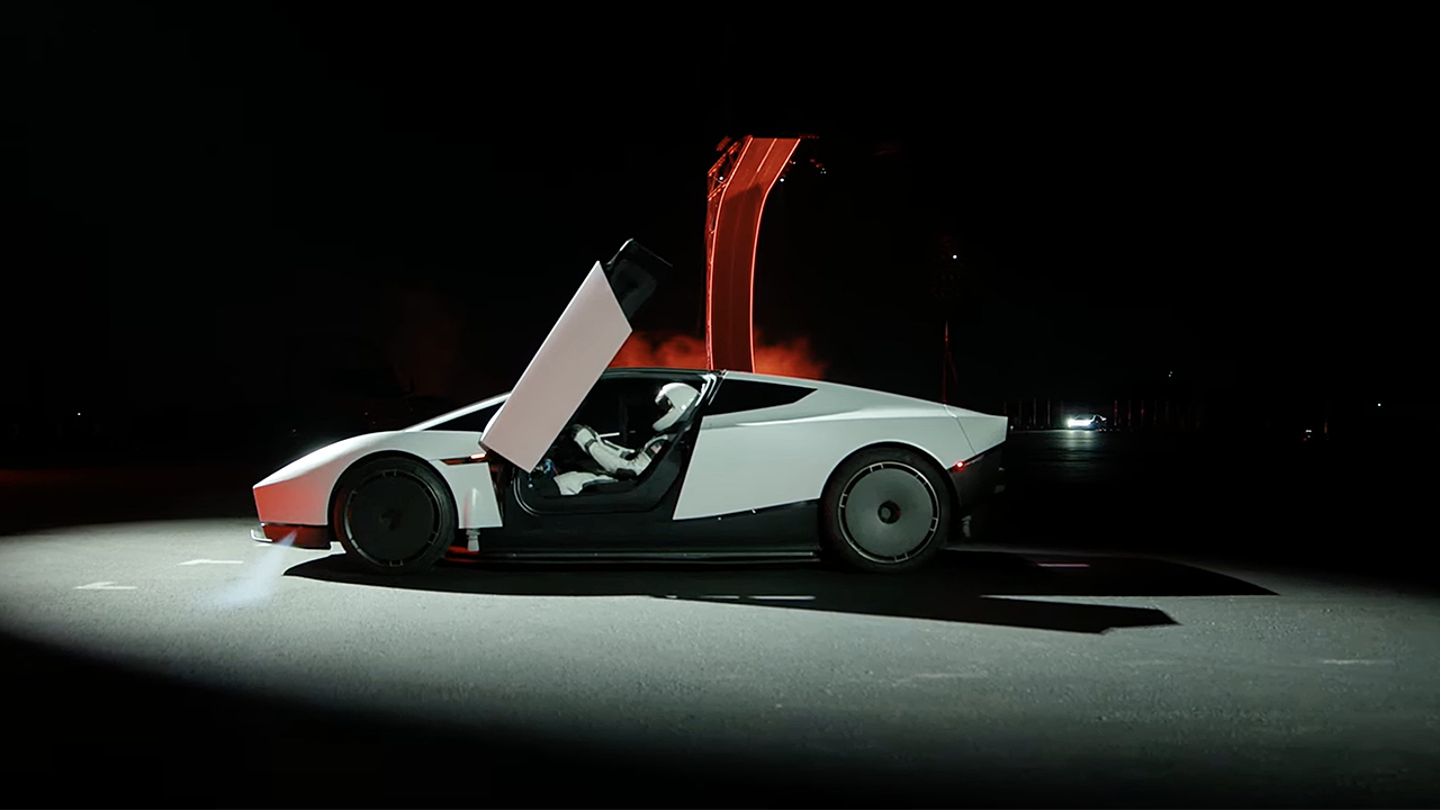
Tesla unveiled its next-generation Roadster on Thursday night at SpaceX’s test site in McGregor, Texas, in an event livestreamed on X. The pitch was a car that can fly. The footage shows something narrower, and the gap between the two is the interesting part.
What Tesla showed
In the first demo, according to Fox Business, the car accelerated up a curved ramp while a fan-based suction system held it to the surface until it was fully upside down. Cold-gas thrusters developed with SpaceX then launched it off the ramp, through a midair flip and into a landing.
A second demo had the car jump over a row of vehicles, including a semi-truck, flip in the air and land on the far side. TechCrunch describes the car using thrusters to lift itself over a Cybercab, a Cybertruck, a Tesla Semi, a Model Y and a Model 3 while moving.
Tesla also showed a 0-to-60 mph run in under a second. Axios reports the claim as 0.8 seconds, which Tesla says is faster than any production car. These are Tesla’s numbers. None of the coverage reviewed reports independent testing.
How it works, as far as we know
The propulsion is compressed air, not rocket fuel. Lars Moravy, Tesla’s vice president of vehicle engineering, said ten thrusters connect to 600 liters of compressed air that lift and spin the car, and that the tank is rechargeable, per TechCrunch. Tesla says the thruster system produces four to five times the force the tires can handle, according to Fox Business.
Tesla’s post on X said every usable void in the car is filled with carbon-fiber-wrapped pressure vessels. TechCrunch notes that vessels of this type have been linked to SpaceX rocket explosions. That is context, not an accusation, but it tells you where the engineering risk sits.
Underneath, fans pull the car toward the pavement, which Axios says gives extra grip for acceleration and cornering. That system is not a gimmick. It is the part most likely to matter outside a stunt show.
Stunt versus flight
Here is the distinction that gets lost in the headlines. Fox Business describes what was shown as a ramp-launched jump with thrusters, not sustained powered flight. Yahoo Autos makes a similar point: Thursday’s demo does not establish that owners could fly the car freely.
Cold-gas thrusters push by releasing stored gas, so the energy is whatever you put in the tank beforehand. A tank that holds enough for a flip and a landing is a different thing from one that holds enough to stay aloft. Tesla has not said which this is.
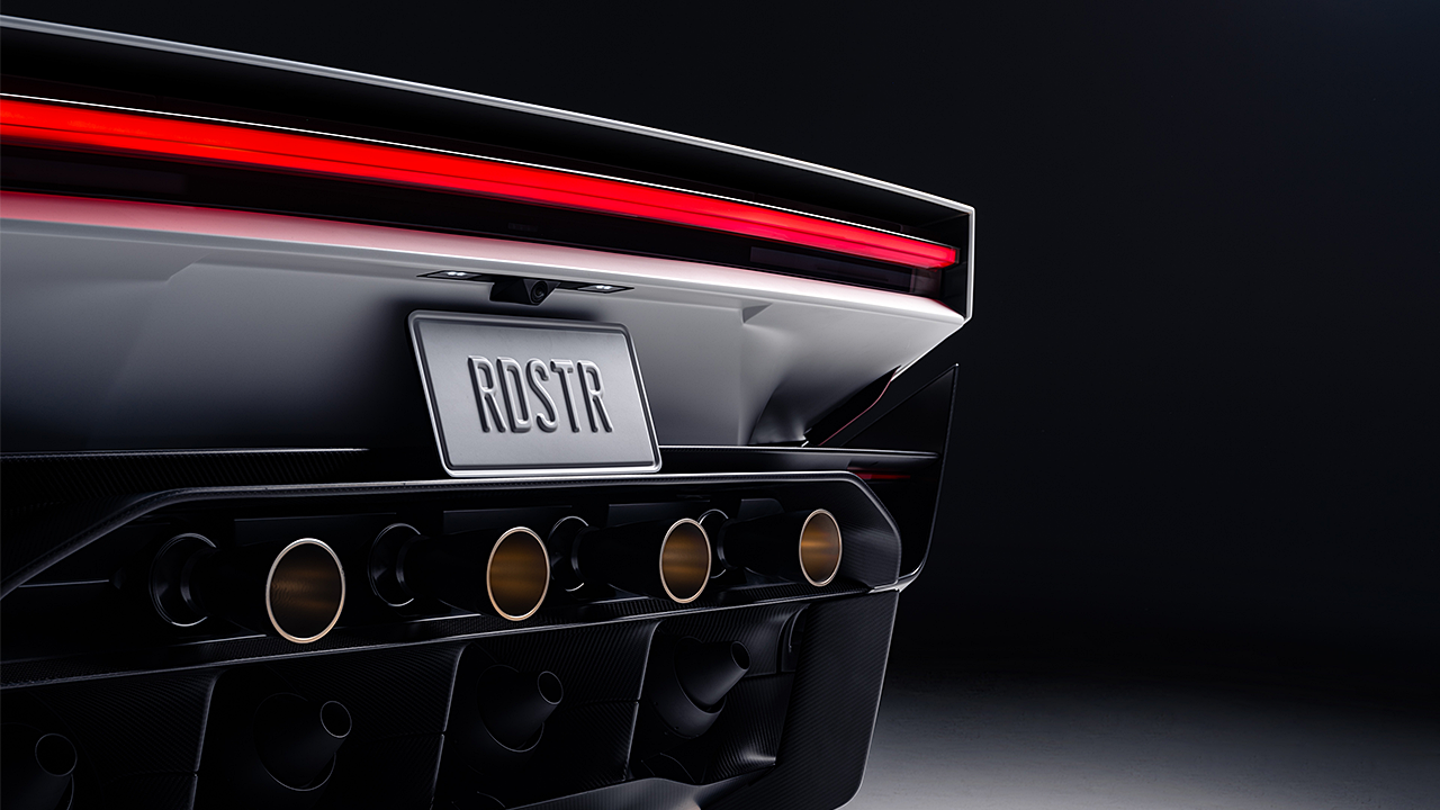
The three trims show how Tesla itself sees the line. Performance is “road ready,” with two seats, active aerodynamics and a multi-mode suction system. Thrust is “race ready,” with two seats, rear-mounted cold-gas thrusters and the sub-one-second acceleration. Rocket is “air ready,” with one seat and ten cold-gas thrusters around the car, and it is invite-only.
All three are quoted at roughly 300 miles of range and speeds above 230 mph in TechCrunch’s account, though Axios says range was not disclosed. When two reputable outlets disagree on a basic spec, treat the number as unsettled.
What Tesla did not say
TechCrunch lists the omissions plainly: no thrust output, no flight duration, no count of how many flights a tank supports, no safety testing data and no certification data. Axios adds that the price and how long the Rocket version can stay airborne were also not disclosed.
Musk was candid about safety. He said the car is “not necessarily a safety optimized car,” and before the demos he warned, “Success is not guaranteed … But if it doesn’t work, we’re at a safe distance.” Spectators were kept back for a reason.
The regulatory wall
A car that leaves the ground enters a different rulebook. Yahoo Autos notes that FAA rules generally treat airborne vehicles as aircraft, with electric vertical takeoff and landing designs falling under specialized frameworks. Axios reports that the flying version is not approved for public roads.
Even the road-going car has open questions. Yahoo reports the door latches appear to be mechanical and the car appears to lack side mirrors, which raises questions about federal street-legal requirements. Asked whether it is street legal, Musk replied, “Depends on your street.”
That answer is funny and also accurate. Approval for something like this would be a long process, and no filings or timelines were announced.
Where the real technology might land
Strip away the flip and there are two ideas worth watching. The first is the fan-based suction system, which could improve grip for any fast car. The second is the control software that coordinates thrusters, tires and aerodynamics in milliseconds. Axios makes the same observation: the underlying active aerodynamics and traction systems could have uses beyond a flying car.
That is where I would look for lasting value. Hardware that sticks a car to the road is easier to certify than hardware that unsticks it.
What to watch next
Three things will tell you whether this is a product or a show. The first is independent measurements of the acceleration and range claims, from a third party and not from Tesla’s own footage. The second is specifics on the thrusters: thrust, tank pressure and how many cycles a tank supports. The third is regulatory filings, which would be the first sign Tesla is trying to make any of this legal on a public road.
Tesla says production starts in 2028. The company first showed this car in 2017 and promised deliveries by 2020, so the date carries less weight than the evidence above.
Editor’s take
I would separate the demo from the product. A car that can jump over a truck, flip and land safely is a serious stunt, and credit goes to whoever tuned those thrusters. It tells us little about whether a normal person can buy one, drive it to work and trust it near other cars. The honest answer today is that nobody outside Tesla and SpaceX knows. Until independent testing and real specifications arrive, I would treat the flying part as a promise and the grip system as the technology worth watching.