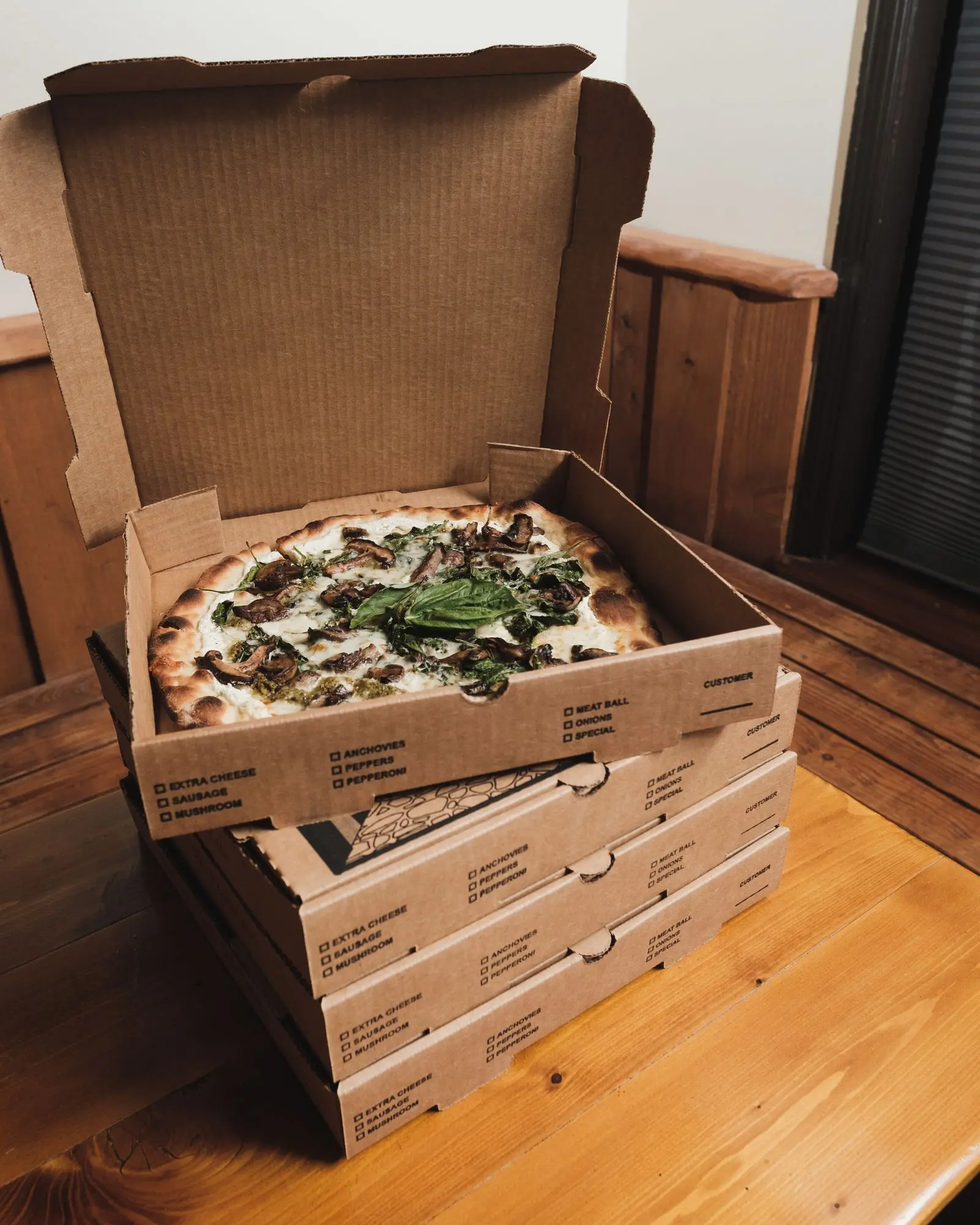
Domino’s customers are still ordering pizza. They are just putting less on each order. That small change, visible in a quarter where the company beat Wall Street’s profit forecast, helps explain why its shares fell after Tuesday’s report.
The pizza chain reported third-quarter earnings of $4.60 per share, ahead of analyst estimates of roughly $4.36 to $4.39, on revenue of $1.19 billion, up 3.4% and above the $1.17 billion analysts expected. The part investors focused on was underneath: U.S. same-store sales grew just 0.3%. Shares dropped roughly 2% to 3.5% depending on the outlet and the time of day.
The headline beat, and what sits behind it
Domino’s net income was $152.2 million, up from $139.3 million a year earlier, according to Quartz. Operating income rose 8.3% to $241.8 million. Global retail sales reached $4.84 billion, up 3.2%, versus growth of 6.3% in the same quarter last year.
Where the revenue growth came from matters. Quartz and Nation’s Restaurant News both attribute it to the supply chain business, where Domino’s sells ingredients and equipment to its stores, plus royalties from store growth. Food basket pricing charged to stores rose 2.2%. In plain terms, the company earned more from supplying its restaurants, even as the restaurants themselves sold barely more than a year ago.
A lower advertising spend also helped operating income, per Motley Fool. Buybacks that shrank the share count helped earnings per share, according to 24/7 Wall St.
Why 0.3% is a weak number
Same-store sales compare revenue at stores open for at least a year, which strips out growth from new openings. It is the standard measure of whether demand at existing locations is rising.

Domino’s 0.3% faces a tough comparison. Nation’s Restaurant News noted that the year-earlier quarter grew 5.2%, boosted by the “Best Deal Ever” promotion. But the slowdown is not a one-quarter story. This is the third straight quarter below 1%, after +0.9% in the first quarter and +0.1% in the second. International same-store sales, excluding currency effects, grew 0.2%, down from 1.7% a year ago, per 24/7 Wall St.
Quartz also reported that company-owned U.S. stores grew 1.0%, while franchise stores grew 0.3%. Franchisees run most of the system, so that gap is worth noticing.
The receipt tells the story
The most useful detail in the reports is not the sales figure. It is how people are ordering.
Order counts actually grew in both delivery and carryout, according to Nation’s Restaurant News. What fell was the size of each order. Motley Fool reported that average order values are shrinking and customers are buying fewer items per order, which the article attributes to financial strain, including higher gas prices. It adds that Domino’s has used discounts to defend market share and drive traffic, and those discounts also pull down the average ticket.
New CEO Joe Jordan, who took over October 1 from Russell Weiner, put the problem this way: “Consumers remain under pressure, but they continue to choose Domino’s.” He also said, “I believe growing orders is the most important thing a brand can do in the current environment.” Weiner moved to executive chairman.
The company is adjusting its menu to match. A personal-sized Detroit-style pizza launched in August, aimed at what Jordan called the “me-we” occasion, where a group eats together but each person picks an individual meal. Nation’s Restaurant News says third-party delivery apps are a key channel for that product.
The number franchisees will care about
Domino’s added a net 175 stores worldwide in the quarter, bringing its total to 22,706, with 7,257 in the U.S. and 15,449 abroad, per Quartz. Only 26 of those net openings were in the United States.
Motley Fool and a summary from BigGo Finance report that the company cut its outlook for U.S. net new stores to 125 to 150, citing profit pressure on franchisees. 24/7 Wall St. said it could not find a numeric store target in its coverage, so that guidance figure rests on two outlets and deserves a check against the company’s own materials. Nation’s Restaurant News reported that Domino’s long-term potential of 8,500 U.S. stores is unchanged.

This is where the franchise model’s built-in tension shows. The company’s revenue grows when its stores buy more ingredients, at higher prices, and pay royalties on sales. Store owners earn money only if what is left after food, labor and rent stays healthy. If tickets shrink while costs rise, the owners feel it first. That is an inference from the reported numbers, not something the company stated, but the cut in store guidance points the same way.
CFO Sandeep Reddy said U.S. same-store sales should land toward the low end of the low-single-digit range for the rest of the year if current conditions persist. Management expects the economic environment to stay pressured through year-end, per Nation’s Restaurant News.
The market’s view
The stock’s reaction reflected a business that is profitable but not growing at its old pace. Quartz, citing Barron’s, said shares were down roughly 25% for the year as of Monday’s close. Motley Fool’s page showed a 52-week range of $282.00 to $442.35, with the stock trading near $299 on Tuesday, though live quotes change by the minute.
One outlet, 24/7 Wall St., also highlighted the balance sheet: $4.77 billion in fixed-rate notes, negative stockholders’ equity, a current portion of long-term debt that rose to $1.33 billion, and free cash flow down 7.2% year to date, which it tied to working capital timing. Negative equity is common for companies that return cash through buybacks, so it is not alarming on its own. It does mean the company has less room for error if sales stall.
What other operators can take from it
Domino’s is a large, well-run example of a pattern many small businesses are seeing. Customers have not stopped spending. They are trimming at the edges: one fewer side, a smaller size, a cheaper option. For an owner, that means order counts can look fine while revenue per customer slips.
Three questions are worth asking about your own business. Is traffic holding while ticket size falls? Are discounts buying new customers or just lowering the price of existing ones? And do your suppliers’ price increases leave you enough margin when the customer spends less?
What to watch next
The next signals are in the company’s own reporting. Look for whether Jordan’s early changes lift items per order, whether the U.S. store opening pace recovers, and whether franchisee profitability gets a direct mention in the next call.
Editor’s take
I would watch the store-opening guidance, not the earnings beat. A franchisor can post higher profit for a while by selling more to its owners, but when the company itself lowers how many new stores it expects, it is telling you the owners’ math is getting tighter. That is a judgment call by the editor based on the reported figures. Domino’s own next update on franchisee profits will show whether it holds.